Who will get rich
The fantasy that local people - small businesspeople, informal traders, especially black people - will make money or get jobs during the 2010 World Cup.
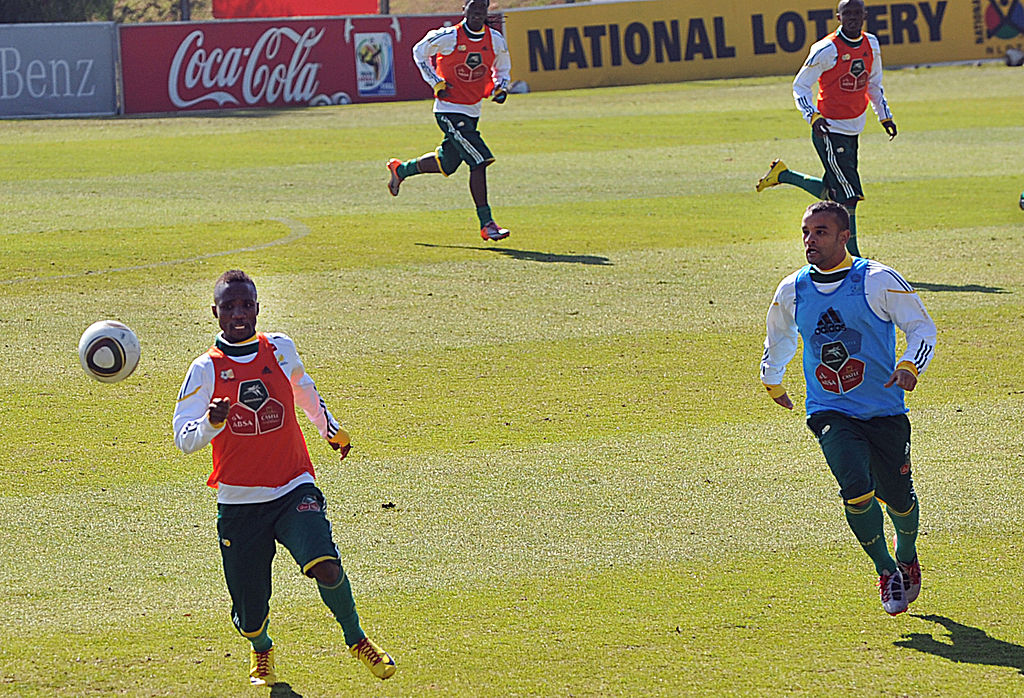
South Africa’s national football team training at the University of the Witwatersrand (Wiki Commons).
Just as the football at the 2010 World Cup will be great, someone will make lots of money. It is not going to be local businesses for sure. This excellent 13 minute short documentary (“Trademark 2010“) for Dutch TV public TV channel, VPRO, takes on the fantasy that local people – small businesspeople, informal traders, especially black people – will make money or get jobs during the tournament (Ht: Tom Devriendt).
Mainly filmed in Cape Town, the tightly structured short film consists of interviews with, among others, a young informal tour operator (who wants to corner the visiting Spanish-speaking market), a construction worker at the stadium (who contemplates the fact that he won’t have work after the stadium is completed), a former sports administrator (who laments FIFA’s greed), the leader of a group of informal traders in downtown Cape Town (who will be prevented from trading during the World Cup), sociologist Ari Sitas and campaigner Eddie Cottle of the group Campaign for Decent Work 2010. And then there’s the city official who sells jargon.
Only discordant note: Why does the film end by legitimizing former councilor, Arthur Weinburg, who represents the Cape Town Environmental Protection Association, a front for rich whites in the neighborhood where the stadium is located and have no other reasons to oppose it other than it is being built in their neighborhood and not somewhere else?