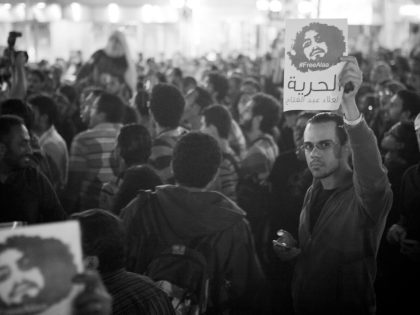
The individual vs the cause
The enduring controversies around Egyptian-American activist Mona Eltahawy.
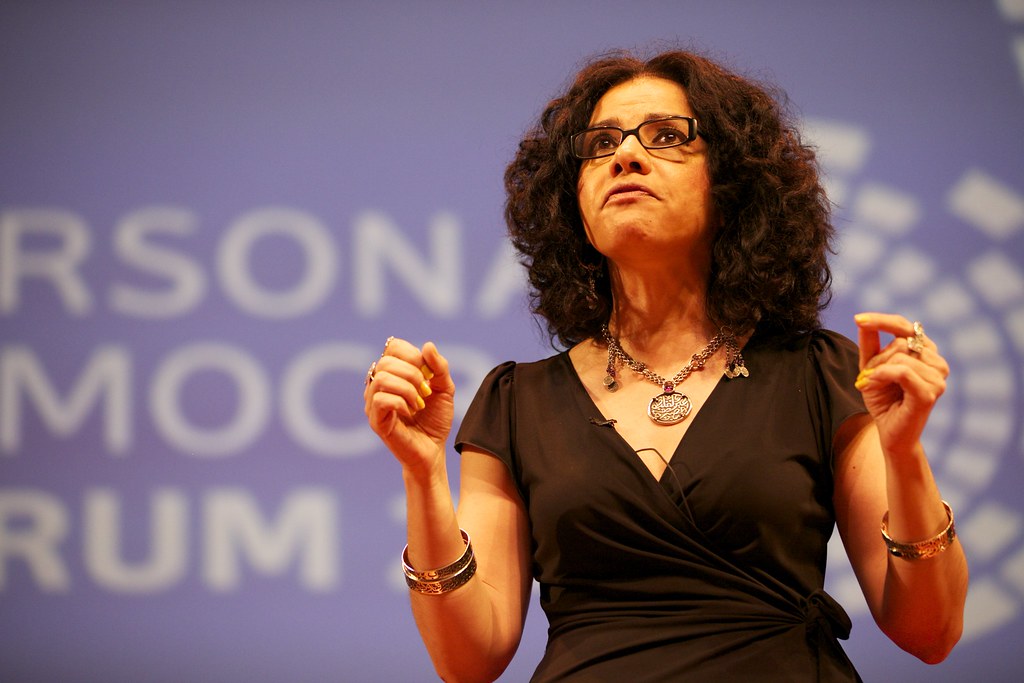
Mona Eltahawey, Image by Personaldemocracy, via Flickr CC.
A week ago the Huffington Post published an article written by Melissa Jeltsen on an increasingly familiar name in women’s activism in the Arab world. The article, entitled “Mona Eltahawy, Egyptian-American Activist, On the Power of Protest,” has a rather misleading title. The focus of the article was not really Ms. Eltahawy’s thoughts on protest in the context of the Arab uprisings, nor the struggles faced by many women. Instead, the article is about Ms. Eltahawy; her history, her supporters, her detractors, and the controversy that surrounds her and her actions.
Eltahawy’s now infamous Foreign Policy article from the May/June 2012 “Sex Issue”, “Why Do They Hate Us”, is a large component of what transformed the Egyptian-American journalist from outspoken pundit into controversial activist. The article encompassed harsh criticisms of multiple cases of female oppression, perpetrated within a bevy of different Arab countries. The tough words were accompanied by provocative images of a naked woman in a body-painted “niqab.”
Eltahawy has since expressed it was her intention to spark a conversation. And spark she did. Unfortunately, it seems the conversation has been less about the issues faced by Egyptian and Arab women, and more about Ms. Eltahawy herself.
When asked by Jeltsen about the article that made her famous, Eltahawy explains that she “wrote the piece very angrily because it was the first one [she] wrote with all 10 fingers and it hurt like hell.” In her defense, Ms. Eltahawy had suffered two broken arms and sexual assault while protesting at Tahrir Square in Cairo months before. What happened to Ms. Eltahawy, along with countless other Egyptians – both women and men – is terrible and deserves recognition. But at what point does the message become about the individual and not about the cause?
Last week’s piece mentions a tweet by journalist Jeremy Scahill from last September. Scahill wrote: “I think Mandela talked less about his 27 years in prison than @monaeltahawy has about her 22 hours in a holding cell.” Despite the mixed replies sparked by this little jab, Scahill does seem to have a point. This appears to be her way.
Jeltsen’s article also talks about Eltahawy’s most recent controversy: her arrest for spray-painting a blatantly discriminatory, anti-Islamic subway sign. Eltahawy’s response when asked about the incident: Why is the left debating vandalism when hate crimes against Muslims have soared since 2010? Yet again, the message got lost in the method.
However on top of all this noise, the message itself appears, in many ways, to be flawed. In her piece, Jeltsen acknowledges Eltahawy’s critics, but really only focuses on one: Moroccan-American writer Samia Errazzouki. The list of Eltahawy’s most outspoken and prominent critics is long, and a significant proportion of them share one very critical thing in common: they are Arab women.
For those who are interested, here’s a few: Leila Ahmed, Samia Errazzouki, Nasrine Malik, Mona Kareem, Dima Khatib and Nahed Eltantawy.
Clearly there is a disconnect. It is critical that issues of female oppression, gender-based violence, and discrimination in the Arab world are talked about. However, as many have stated before, it is also critical that the cultural, religious, political and socioeconomic complexities associated with these issues are put in context.
Having the loudest voice does not necessarily equate to having the soundest argument; it can in fact create more harm than good, particularly if those being discussed do not feel represented. Jeltsen’s article, while interesting to read, is just further proof that in terms of the scope of Ms. Eltahawy’s work, the big story that emerges is not a solution to real problems facing women in the Arab world, it’s Mona.
* Sarah El-Shaarawi is an Egyptian-Canadian living in New York City. She is currently completing a MA in International Affairs at The New School with a focus on Media & Culture in the context of the Arab World.