The missing voices of Western Sahara
At the UN’s annual Western Sahara debate, everyone gets heard except the Sahrawis themselves.
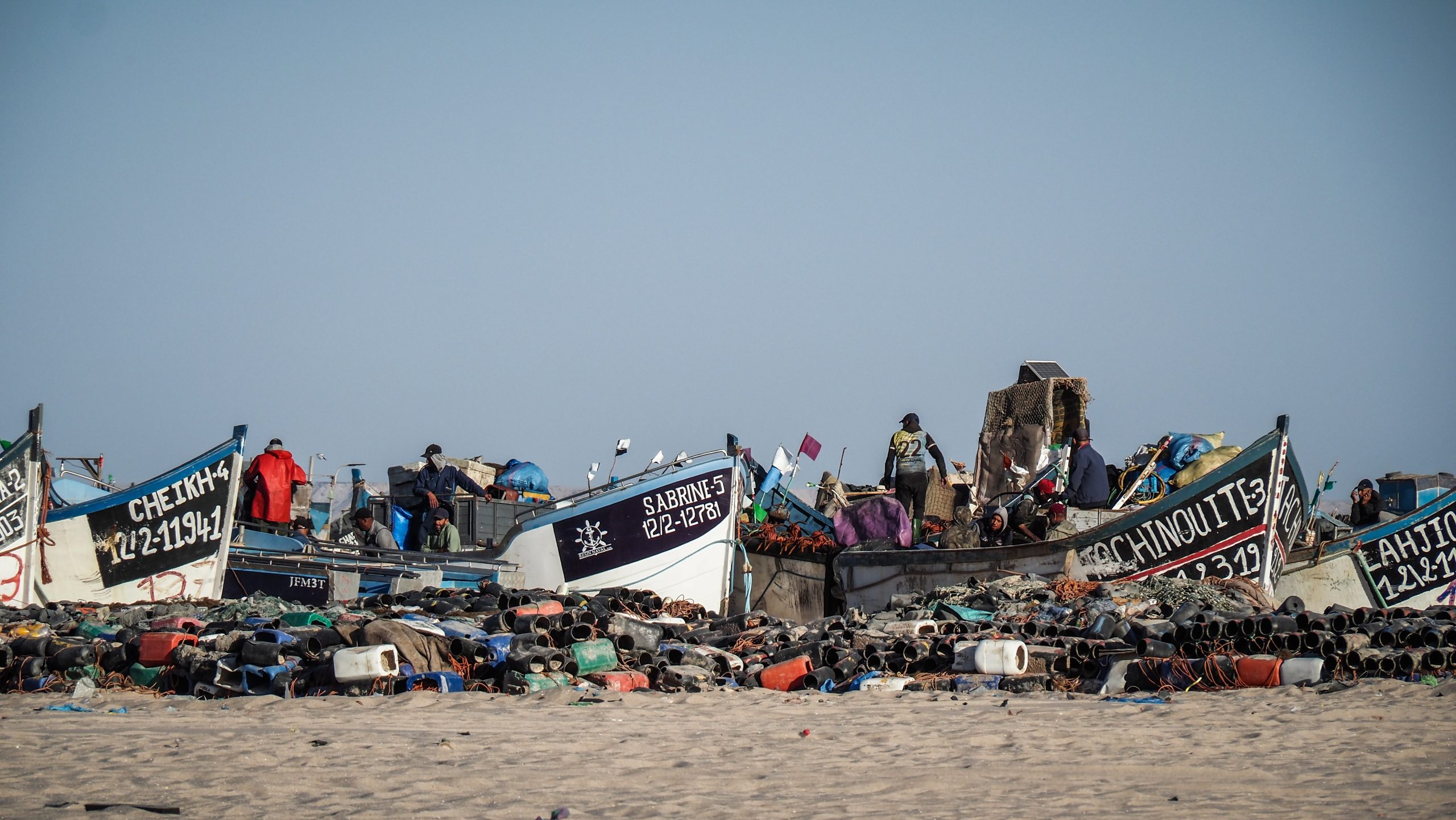
Fishermen in Dakhla, occupied Western Sahara. Image credit Jakub Specjalski via Shutterstock © 2024.
Every year in October, sweater weather settles in, coffee orders are syrup-laden, and the United Nations building in New York transforms into a stage for tense deliberations over the renewal of the United Nations Mission for the Referendum in Western Sahara (MINURSO) peacekeeping mission.
This year, the Security Council (UNSC) adopted Resolution 2797, renewing MINURSO’s mandate for a 35th year, but with a shift… the council formally endorsed Morocco’s 2007 Autonomy Plan as “the most feasible solution,” rather than maintaining emphasis on a full self-determination referendum.
I followed the international news cycle, and something struck me about the coverage. I spent considerable time looking for Sahrawi voices covering the diplomatic battle unfolding at the UN, but, outside of a few Spanish media outlets, I was largely unsuccessful.
There were “regional experts” and “observers of the Maghreb” aplenty. Some were knowledgeable, others partisan. But it was unbelievably difficult to hear from Sahrawis themselves, either in the occupied territories, the liberated zones, the Tindouf refugee camps in southwestern Algeria, or elsewhere. Despite my best efforts, I could not find the opinions of the people whose futures were being negotiated in Manhattan.
Very obvious questions then naturally emerge: “Why are Sahrawi voices absent?” And “What do Sahrawis, those most directly concerned by the political negotiations, think about what is happening?”
So, I reached out to various activists and put those very questions to them.
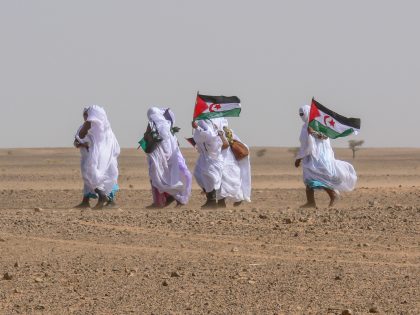
Tiba Chagaf, a 50-year-old Sahrawi who lives between the Tindouf refugee camps and Spain, revealed that, “In the week leading up to the vote on the resolution, the Sahrawi people took to the streets in massive demonstrations, rejecting any proposal that does not guarantee their right to decide their own future.”
For Chagaf, a prominent figure in Sahrawi cultural life, “accepting autonomy after 50 years of resistance in exile is out of the question.” He argues that the resolution sets it up so that “someone gives something they don’t own to someone who has no right over it.”
His remarks refer to the deal struck between the Trump administration and the Moroccan monarchy, which exchanged normalization of international relations between Morocco and Israel for US recognition of Morocco’s claim over the Western Sahara. The agreement was ratified in December 2020 with Morocco’s signature of the Abraham Accords.
Sahrawis are acutely aware that their struggle for self-determination clashes with the political and economic interests of major Western powers. And that is all the more true now that the Sahel is experiencing a period of intense geopolitical turbulence driven by coups and the proliferation of jihadist movements.
Ahmedna Abdi Mebarak, a 26-year-old Sahrawi human rights activist, also claims that Resolution 2797 is “a political maneuver by the United States, which used Western Sahara as a bargaining chip to the benefit of Israel.”
He was born in the Tindouf camps and now resides in France, a vantage point from which he recalls the notable role played by former president Jacques Chirac (1995–2007) in the development of Morocco’s 2007 autonomy plan. The former French president, now deceased, maintained great relations with King Hassan II, and then with his son, the current king of Morocco, Mohammed VI. Even after Chirac’s presidential term ended, it was public knowledge that he and his wife regularly stayed in Moroccan luxury hotels made available by the Moroccan king. Even then, the dominant discourse in France often praised Morocco for its “stability” and for its role as a French ally.
Mebarak criticizes this stance, arguing that France sees Morocco as a lever for advancing its interests. In his view, the former colonial power “continues to look for a gateway to expand its influence in the Maghreb and across Africa.”
Curiously, despite such repeated violations of international law by superpowers, the Sahrawis I spoke with say they still place their trust in African and international legal institutions. Their main “compass,” they insist, remains UN General Assembly Resolution 1514, adopted in December 1960, which calls for the independence of colonized countries and peoples.
They also highlight the ambiguity of the latest Security Council resolution, which extends MINURSO’s mandate, but also simultaneously “calls on the parties to engage in discussions without preconditions and on the basis of Morocco’s autonomy proposal.”
“It’s four pages of a plan that neither Sahrawis nor Moroccans truly know. No one really understands what the autonomy plan even entails,” insists Mebarak.
The lack of detail is, unsurprisingly, a common theme in the Western Sahara conflict, which is often described in Western media as “low-intensity.” Africa’s last colony rarely makes front-page news. And when the media do cover it, they often adopt the Moroccan narrative.
In France, for instance, a country that voted in favor of Resolution 2797 at the UNSC, media coverage varies widely depending on the outlet’s editorial line. Outlets considered right-wing tend to lean pro-Moroccan. Only progressive or left-leaning editorial policies give more space to Sahrawi perspectives, such as Mediapart or L’Humanité. These outlets are closely monitored by Moroccan influence networks in France.
For instance, during the Pegasus spyware scandal, it emerged that L’Humanité’s senior reporter, Rosa Moussaoui, who has covered the Western Sahara for years, was among those whose phones were targeted by Moroccan authorities using Israeli spyware.
Such intimidation tactics are accompanied by disinformation campaigns on social media and smear campaigns in pro-government Moroccan media. Le360 labeled Moussaoui “Madame Polisario” and “the most hostile voice against Morocco,” while Barlamane accused Le Monde, Spain’s El Independiente and El Español, and Middle East Eye of promoting a “narrative hostile to Morocco.”
Their “offense”? Publishing maps showing the border between Morocco and Western Sahara or using the term “occupied territories” to refer to the Moroccan-controlled zone.
Mebarak also explains the attempts to silence Sahrawi voices on the ground, including in France. “Every protest, every conference, every university event, everything we publish on social media is quickly relayed to the consulate, which then mobilizes nationalist Moroccans to disrupt or shut down our activities,” he says. In 2020, a pro-Sahrawi demonstration in Paris descended into violence when pro-Moroccan counter-protesters organized a simultaneous gathering at the same location.
Yet, what I learned from those seasonal autumnal conversations was that no amount of intimidation, geopolitical calculations, or dominant media narratives will completely silence Sahrawi voices. And, more importantly, as long as they remain excluded from decisions shaping their future, no lasting solution can be found for the Western Sahara.