Pilgrimage to power
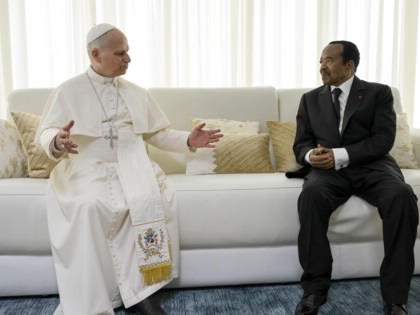
From John Paul II to Benedict XVI, papal visits to Cameroon have often come when Paul Biya’s government faced political turmoil.
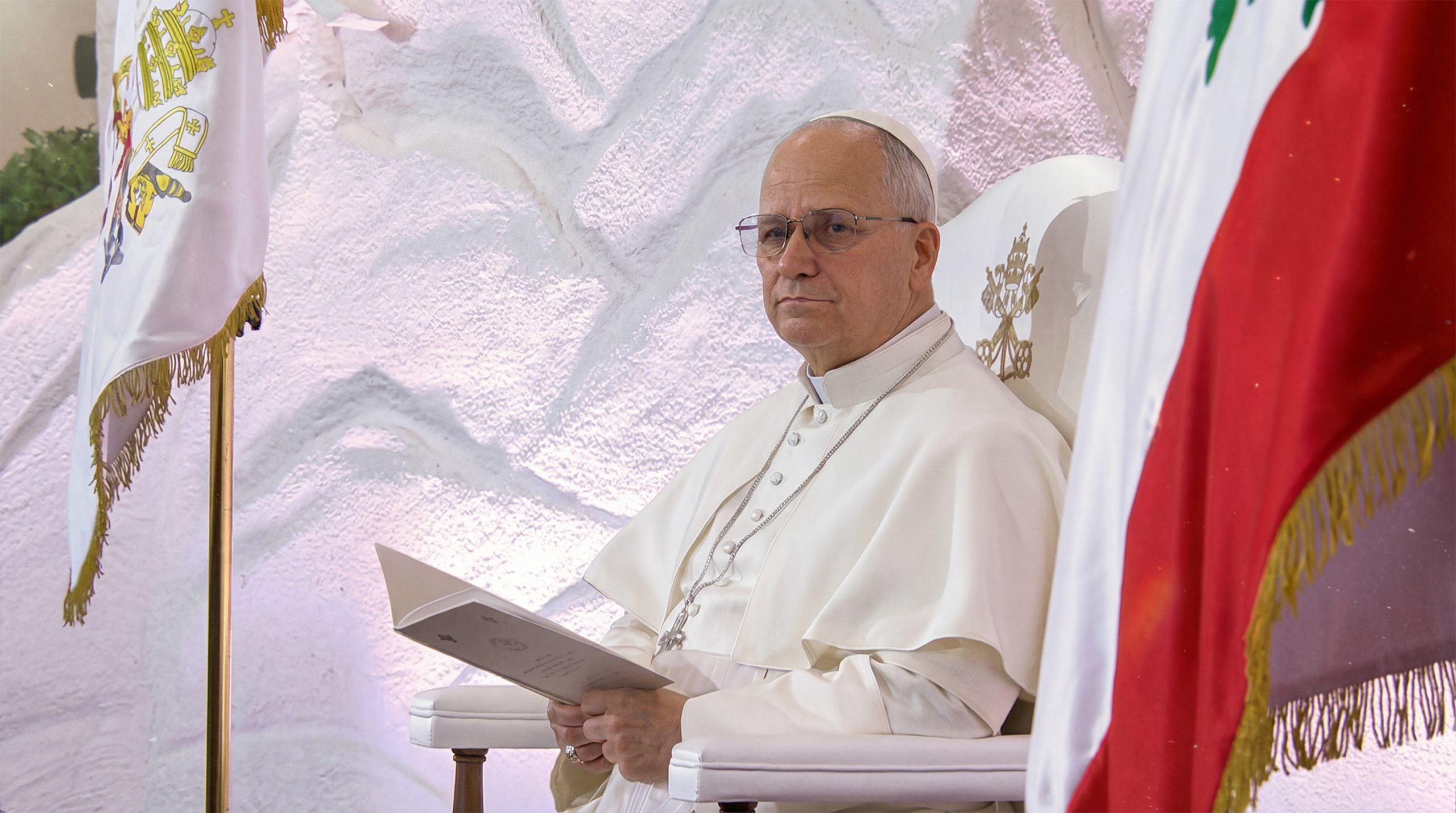
Pope Leo XIV in Lebanon. Image credit Paul Saad via Shutterstock © 2025.
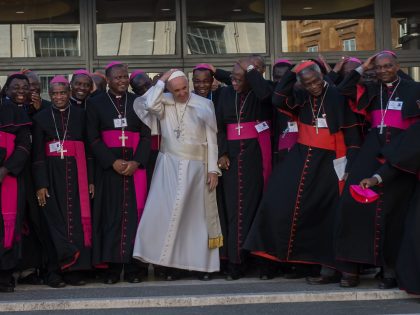
If Pope Leo XIV makes his visit to Cameroon, as announced last month, it will be the fourth time a Roman Pontiff has visited the central African country of about 30 million people. The visit would put Cameroon on par with only one other African country that has received four papal visits in the last 40 years—Kenya, exceeding those made to the DRC (50 million Catholics) and Nigeria (25 million Catholics). Why should Cameroon receive more papal visits than the DRC or Nigeria? Is Cameroon in need of more pastoral care than these two countries? Is Cameroon more important to Catholicism in Africa than, say, the DRC or Nigeria?
The timing of Papal visits to Cameroon is important to consider; they are usually made during times of crisis, periods of upheaval that threaten the survival of President Paul Biya’s regime. Pope John Paul II made the first visit to Cameroon in 1985. Biya, a Catholic, had just been handed power by his Muslim predecessor, Amadou Ahidjo, in 1982. In 1984, there was an attempt to remove Biya through an unsuccessful coup d’état. Biya was still purging the government and the military when Pope John Paul II visited the country in 1985. Even though the pope did not say much about what was happening at the time, news outlets did not fail to notice that he had come to give a Catholic president moral support. At the time, Biya had been president for a little more than two years.
The second visit from Pope John Paul II was in 1995, and the occasion was ostensibly to sign the synodal document Ecclesia in Africa. However, the early 1990s was a time of significant political upheaval in Cameroon. Biya had been forced by popular protests to consent to multiparty democracy. A highly contested election took place in 1992 that was believed to have been won by the opposition candidate, Ni John Fru Ndi. When Fru Ndi declared himself the winner, he was placed under house arrest for about three months while Biya tightened his grip on power. This period also saw the murder of Catholic religious leaders in Cameroon, including Fr. Engelbert Mveng in April 1995, just prior to the Pope’s visit in September that same year. Even though he raised the question of insecurity in Cameroon, the papal visit was seen as blessing the presidential couple, thus granting legitimacy to a brutal dictatorship.
In 2009, the third visit occurred under the papacy of Pope Benedict XVI. One year before this visit, Biya revised Cameroon’s Constitution to remove the presidential term limit. This change led to widespread riots and dozens of deaths. During the visit, Benedict XVI described Africa as a continent of hope but said nothing about the death and destruction orchestrated by the Biya regime.
Now, in the wake of recent and contested elections in Cameroon, with evidence that Biya’s win was rigged, Pope Leo XIV is planning what is being described as a pilgrimage and pastoral visit. A Cameroonian Catholic priest, Fr. Ludovic Lado, wrote to the Vatican urging the Pope not to visit under the circumstances. The Vatican ignored his entreaties, once again showing that when the Biya dictatorship is under stress, the Catholic Church, in the person of the Roman Pontiff, stands ready to lend moral and political support.
And herein lies the essence of Catholic neocolonialism in Cameroon. Neocolonialism describes a magic trick, a sleight of hand, that is designed to detract from where real power in a postcolony lies. In this case, the denizens of former colonies are given the impression that they are in control of their destiny, that they have a say in the government that rules them. However, real power lies elsewhere, in a foreign land. It does not matter whether Cameroonians voted for the Biya regime. Biya always ends up stealing the election and brutalizing the people. And the Vatican is always on standby to grant the ignominious regime papal blessing. Here we see a Machiavellian appropriation of the church to sanctify state brutality and, in this case, the dehumanization of Cameroonians.
If Pope Leo XIV goes to Cameroon next month, he will hold a Mass in which Biya and his wife Chantal will be center stage in the Eucharistic celebration. In that one act, the magic trick of Catholic neocolonialism will again be performed.