Who is AFCON for?
From air travel costs and border regimes to television culture and class exclusion, the problem of attendance at AFCON is structural, not because fans lack passion.
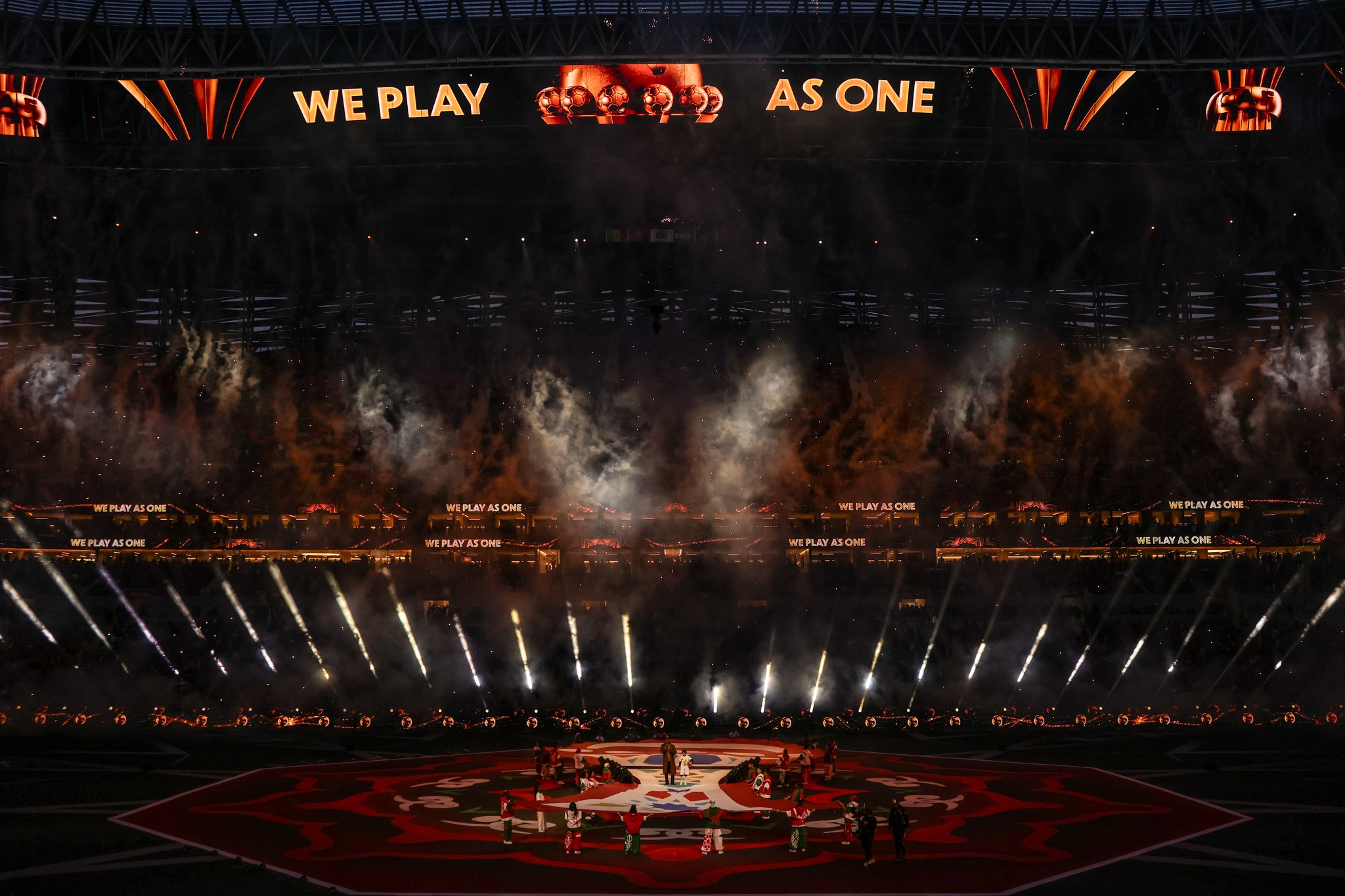
The closing ceremony of the 2025 Africa Cup of Nations at the Prince Moulay Abdellah Stadium,
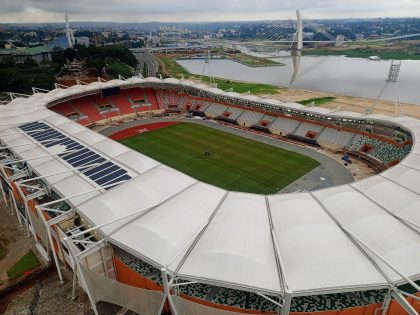
Although Senegal’s AFCON final victory against Morocco drew a full crowd, the tournament confirmed a persistent reality. Outside of host-nation matches, stadiums stands remained sparse. With twenty-four teams competing, representing nearly half of Africa’s nations, one might have expected significant traveling support for each country’s games. Yet, even with impeccable organization and world-class facilities, attendance remained sparse, revealing deeper, systemic issues that extend well beyond sport.
This phenomenon is not new. In Egypt (2019), to fill empty stands, organizers had recourse to soldiers dressed in team colors (BBC Sport, 2019). The sparse stands that television production cannot hide are a recurring characteristic of many AFCON matches.
The 2023 edition in Côte d’Ivoire, however, had raised hopes for a lasting change. Stadiums were full, filled with a festive atmosphere of songs and dances. But this success appears to have been a contextual mirage, out of exceptional circumstances. These include Côte d’Ivoire’s unique geography and demography, located at the heart of West Africa and ECOWAS, which benefited from the presence of strong diasporas from neighboring countries (Mali, Burkina Faso, Senegal, and Guinea), many of whom were qualified. In addition, regional mobility, with an integrated road network and affordable inter-state transport, enabled an influx of supporters by land, an option virtually non-existent for a country like Morocco, politically landlocked by its visa policies vis-à-vis most African nations, yet paradoxically more accessible to European tourists.
Two years later, the return to reality in Morocco proves that perfect technical organization is not enough. The crucial Senegal-Egypt semi-final did not sell out. The problem appears to be systemic.
The vitality of a major sporting tournament depends on fans’ ability to travel. In Africa, however, this mobility is hindered by colossal structural barriers. Air travel is prohibitively expensive in Africa. Intra-African flights are among the most expensive in the world. As noted by Lise-Marie Kesby in a BBC article, a trip of similar distance costs 3 to 5 times more in Africa than in Europe, with multiple layovers and multiplied durations. For a large part of the African middle class, following their team by air is utopian.
Beyond the continent’s vast geography and immense distances, overland travel across national borders in Africa remains a significant challenge. Although the continent’s road infrastructure has improved significantly, highway networks are still not fully developed. Furthermore, transnational road and rail connections are hindered by slow and complex administrative procedures at political borders.
As a result, while a journey between neighboring West African capitals like Abidjan and Ouagadougou is feasible, traveling from Lagos to Rabat (5,473 km) or from Kinshasa to Casablanca (7,680 km) represents a logistical, financial, and often security-related expedition that is virtually unimaginable for the average football fan wishing to attend the Africa Cup of Nations (AFCON).
The socio-economic context is unfavorable and affects the vast majority of the African population. With economies mostly classified as lower-middle or low-income and high youth unemployment, the potential public able to bear these costs shrinks drastically. Travelling to attend AFCON thus becomes an affair for an economic elite and a diaspora benefiting from strong currencies, sometimes cheaper airfare, and more regular flights from Paris, Brussels, London, etc.
Beyond logistical obstacles, a more fundamental question emerges: is African football still rooted in the daily lives of Africans? As Lamine Harlem analyses in Africa Is a Country, the true popular success of AFCON is measured less by stadium attendance than by its audience outside the stadium. The screens of cafés, restaurants, and homes across the continent have taken over. These social hubs, exemplified by the now-omnipresent “sports bars,” symbolize a well-established football culture in Africa. While not the direct cause of sparse stands, they reveal a symptom. The collective match experience has largely shifted from the stadium to the screen, with real implications for African football.
Since the 1990s, satellite television has displaced the heart and identities of African football. Entire generations have grown up idolizing Barça, Real Madrid, or Manchester United, consuming the Premier League or La Liga every weekend via beIN Sports, Canal+, or SuperSport. Even though African players have greatly contributed to this anchoring, this constant exposure has, over the decades, led to a cultural alienation, which can also be theorized as electronic colonialism. Local leagues, perceived as disorganized and of poor quality, have been neglected.
The modern African football fan’s identification and emotional life have largely shifted toward European clubs, experienced through screens. This has left African national teams serving mainly as conduits for sporadic, tournament-driven patriotism, very intense during the AFCON but not strong enough to draw crowds for a match like Mali vs. Congo, with fewer known European-based players.
AFCON remains a major media event, as evidenced by its rising TV rights. It sparks real passion, but one that is increasingly televisual and sporadic. To reverse the trend of empty stands, improving ticketing, beautiful stadia, and CAF’s higher revenues will not suffice. It will require tackling structural continental challenges that fall to states and the public or private decision-makers of football governance.
Consumption and participation in the sporting spectacle depend on mobility infrastructure, such as affordable air travel and fast, safe road and rail networks. Let us dream of an Africa free of crises, crossed by high-speed trains (TGVs), highways, and low-cost flights.
Meanwhile, African football requires a profound reevaluation of local championships to recreate a weekly link between fans and their local football, rebuilding identities rooted in the local ecosystem. Investing and reinvesting financially, socially, and humanely in grassroots football, its community infrastructure, and its human resources, to re-root the culture of the game.
In the meantime, AFCON will continue, every two years (then every four years), to offer an intense but brief emotional fireworks display. But can it help revive a flame that burns far beyond three weeks of competition? The question remains: can it contribute to recreating a football ecosystem by and for the average African on the continent, without continuing to imagine its success through the incessant, poorly compensated export of its talents to the aspirational machine of neoliberal football, subservient to an endless quest for more revenue? Only time will tell.