Bread or Messi?
Angola’s golden jubilee culminated in a multimillion-dollar match against Argentina. The price tag—and the secrecy around it—divided a nation already grappling with inequality.
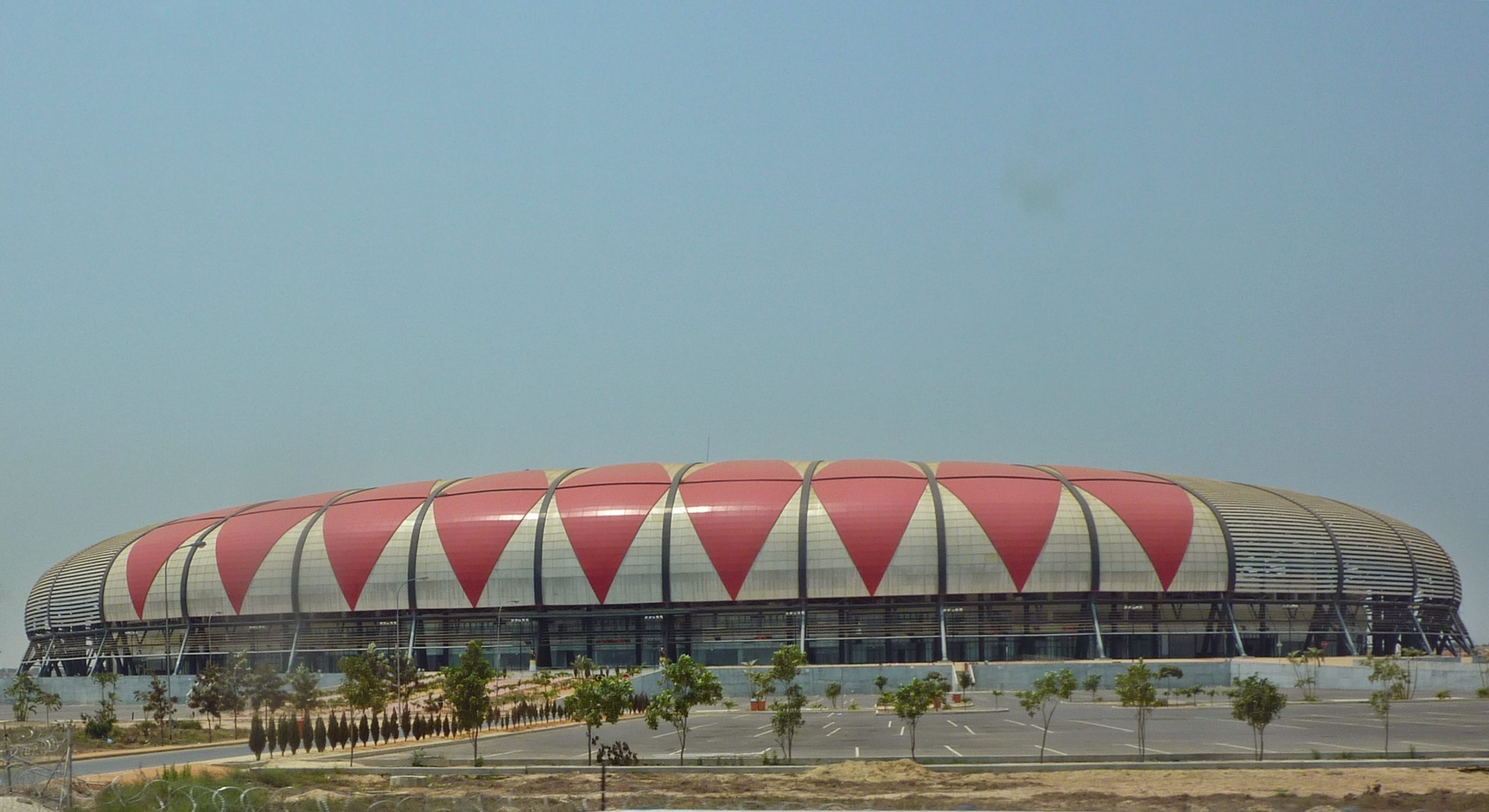
Estádio 11 de Novembro, Luanda, Angola. Image credit Bryn Pinzgauer via Flickr CC BY 2.0
The Argentine national football team landed at 9:00 pm in Luanda, Angola’s capital and main urban and economic center, on the evening of November 13, two days after the official ceremony commemorating 50 years of national independence from Portuguese colonial rule. The ceremony took place on the morning of November 11 with Angolan pomp and circumstance in front of 13 heads of state and government invited for the occasion. The beginning of 2025 was marked by the inauguration of celebrations for 50 years of national independence. In addition to eight sessions awarding diplomas of merit and medals to 4,600 people—both nationals and foreigners—the official celebrations calendar was marked by controversy over the exclusion of nationalists Holden Roberto, founder of the National Liberation Front of Angola (FNLA), and Jonas Savimbi, founder of National Union for the Total Independence of Angola (UNITA), from the initial lists of the names. The FNLA and UNITA were nationalists movements opposed to the People’s Movement for the Liberation of Angola (MPLA). The descendants of Roberto and Savimbi were invited by the Presidency of the Republic, the organizing body of the event, to receive medals in the Independence category from President João Lourenço at the last awards ceremony held on November 8. The celebrations ended with a friendly match between the national teams of Angola and Argentina—a game also mired in internal controversy.
The million-dollar game, marked on the official calendar of celebrations for 50 years of independence, was publicly announced by Lourenço a year ago at a meeting with the youth of his party as a gift on the eve of the Christmas holiday season. Lourenço made the public announcement to galvanize considerable segments of Angolan youth who are enthusiastic about the stars of world football and high competition and performance. The news provoked a mixture of joy and frustration, dividing Angolan youth between activists, football enthusiasts, and Lionel Messi fans, and the segment of civil society critical of President Lourenço’s governmental and authoritarian tendencies. Critics of Lourenço’s government wanted to know what the financial cost to the country would be of the contract signed with Lionel Messi’s world-champion national team. What is certain is that the Angolan government is estimated to have paid around US$25 million for this match, with Messi personally receiving US$12 million. The Angolan private press reports that the amount paid is between US$30 million and US$25 million.
The information is uncertain because the government, faced with waves of public criticism and campaigns to dissuade the Argentine national team from playing on Angolan soil, did not disclose the exact value of the contract. It merely confirmed the match, stating through Minister of Youth and Sports Rui Luís Falção Pinto de Andrade that the invitation came from the Argentine national team. Responding to questions from a sports journalist from TV Zimbo, a private station that has been returned to public ownership, the minister said, “The Argentine national team, including Messi, is coming to Angola.” Regarding costs, the minister stated, “Naturally, some businesspeople will contribute, but the most important thing is that we have committed to picking them up and taking them there, paying for their accommodation and internal transport.” The national airline TAAG has made one of its Boeing aircrafts available to the Argentine national team.
No one believed the minister and Argentina’s sudden interest, as world champions, in playing with the Angolan team on their own initiative. With an air of seriousness, to hide his discomfort, the minister tried to counter the announcement made by the president and head of government himself in 2024, omitting the value of the contract. In turn, the president of the Angolan Football Federation (FAF), Fernando Alves Simões, in an interview with Radio France International (RFI), responded to the criticism by stating that “in a country where democracy reigns, everyone is free to make their own analysis and criticism, even if they sometimes lack in-depth knowledge of what happened. In fact, our minister of youth and sports said in an interview that it was a group of businessmen who got together and wanted to join us in bringing the national team and treating us to this important match on our Independence Day. Now, people are free to criticize even without knowing the underlying reasons, such as why Argentina is coming or why it is not coming. But, unfortunately, in a democratic country, we have to believe that it is like in Portugal, France, Italy… everyone criticizes, and often without reason.” It turns out that the FAF president forgot to mention that the government is not sharing information. And if he did communicate it, he did so poorly or did not tell the whole truth. The criticism against the Argentine national team’s visit has gained more traction because the Angolan Ministry of Youth and Sports omitted the contractual information.
It has shown no interest in disclosing the contractual conditions with the Argentine national team. The Angolan people know that a team like Argentina does not play for free, out of mere altruism. A considerable part of Angolan society believes that this was not the right time to hold a game that will cost millions.
The dissuasion campaign promoted by four Angolan civic associations and a considerable number of individual activists was insufficient to counteract the government’s desire to give away the million-dollar game with the Argentine national team. The open letter, addressed to the Argentine Football Association and its national team, is signed by the Episcopal Commission for Justice, Peace and Integrity of the Episcopal Conference of Angola and São Tomé (CEAST ), Pro Bono Angola, the Association for Justice, Peace and Democracy (AJPD), and Friends of Angola (FOA). These organizations considered that their appeal “is not opposed to sport or to the bonds of friendship between peoples.” For them, it is “a cry for conscience in the face of the painful reality experienced by millions of Angolans, a reality that contrasts shockingly with the ostentation and millionaire spending involved in organizing this event.” Many activists also used social media to send messages to Lionel Messi’s accounts on digital platforms.
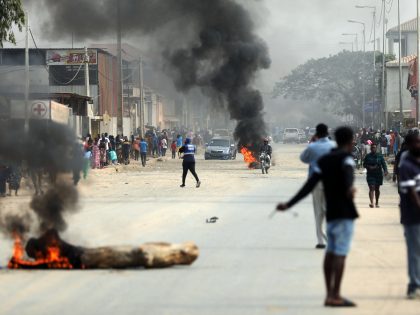
The only effect that this campaign had was to mobilize society and raise awareness to draw attention to the government’s priorities in the face of serious social and economic hardship affecting considerable segments of Angolan society. On social media, as an alternative space to the Angolan public sphere, opinions are divided. There is no consensus among young people regarding the millionaire game. The enthusiasm of some and the frustration of others marked the present moment. Young people are torn between enthusiasm for football and the harsh reality of everyday life. A little momentary joy to forget the hardships of life is the remedy that Lourenço’s government has decided to give Angolans. Here, at this moment, football and politics intersect and intermingle, acting as an antidote to counteract the hardships of daily life for Angolans, given the government’s inability to respond to national emergencies such as hunger, unemployment, and deficits in sectors such as education and health.
The Angola vs. Argentina football match shows that the Lourenço government has other priorities. Projecting the government’s image abroad through the football match is more important. A sliver of contentment is better than an empty plate and thousands of needy and vulnerable families. Of course, not everything is hunger and despair in Angola. A sliver of happiness is better than an empty plate or empty stomachs. The possibility of having a world football star in Luanda mobilizes other segments of Angolan society that are socially and economically comfortable. Not least because tickets for the millionaire game range from US$1.09 to US$2,500for the general admission stands and US$3,250 to US$5,450 dollars for the private cabin—the stadium’s VIP area. It is a marker of social differentiation, as it is not affordable for all Angolans. The cost of a match ticket is a variable that documents social distinction in Angolan society. The lower classes of society interested in top-level football will have to content themselves with television images, as the government mobilized an extraordinary publicity machine for nationwide broadcasting via large screens in the streets. Sports journalists from public channels and ruling-party militants are thrilled. They say the match will go down in history as part of the celebrations marking 50 years of national independence. They say that Angola is the second country in Africa to host the Argentine national team, after South Africa in 2010. At a press conference held on the evening of the November 13, Argentine coach Lionel Scaloni said, “We saw the joy of the people at the airport and that fills us with satisfaction.” The Argentine coach was referring to the enthusiastic crowd of young people and teenagers who gathered at Luanda airport and on the avenues of the capital as the team’s motorcade passed by on its way to the hotel.
The same tactic had already been tried at the end of the Afrobasket competition that Angola hosted and won in August this year. On the day of the final game, President Lourenço went to the stadium to watch the match, which culminated in the presentation of the cup to the champions. At that moment, the president was booed by the spectators in the stands. To counter this, the background music was turned up to drown out the protests. Visibly embarrassed by the protests, the president was forced to leave the venue in a hurry. However, the players of the national basketball team, including the technical staff, were each awarded a top-of-the-range vehicle (the new Toyota Prado model), apartments, and cash. This move by Lourenço’s government sparked a wave of discontent among the Angolan public and led to comparisons with other areas and sectors in the country. None of this seemed to deter the government from repeating its practice of combining sport and politics, once again, for its celebration of 50 years of independence.
The million-dollar contract with the Argentine national football team is political anesthesia, which Lourenço’s government offered Angolans on November 14, 2025, on a sunny afternoon at the independence-namesake 11 de Novembro Stadium. The anesthesia generates enthusiasm and divides society. With strong security measures and time off work decreed by the Luanda provincial government, the match took place on Friday afternoon, and the presidential couple led the honours, toasting the two teams with gifts commemorating 50 years of Angola’s independence. President Lourenço, accompanied by the first lady, the minister of youth and sports, and members of the FAF, was once again booed by the crowd in the stands. Unsurprisingly, Argentina won the match, scoring two goals, the second of which was scored by Messi, much to the delight of the fans. Two hours after the end of the 94 minutes of play, Lionel Scaloni’s team and Lionel Messi, the team captain with his private jet, left the Angolan capital to return to their home country.
Thus ended the celebrations of 50 years of independence with a million-dollar game that divided Angolan society, while Messi and company took home millions of dollars. The day and weeks after the match, the harsh reality of scarcity in Angola continues to haunt large portions of its society, while the match itself remains a distant memory.