Co-opting African literature
Can a festival meaningfully applaud African creativity while its sponsor profits from African death?
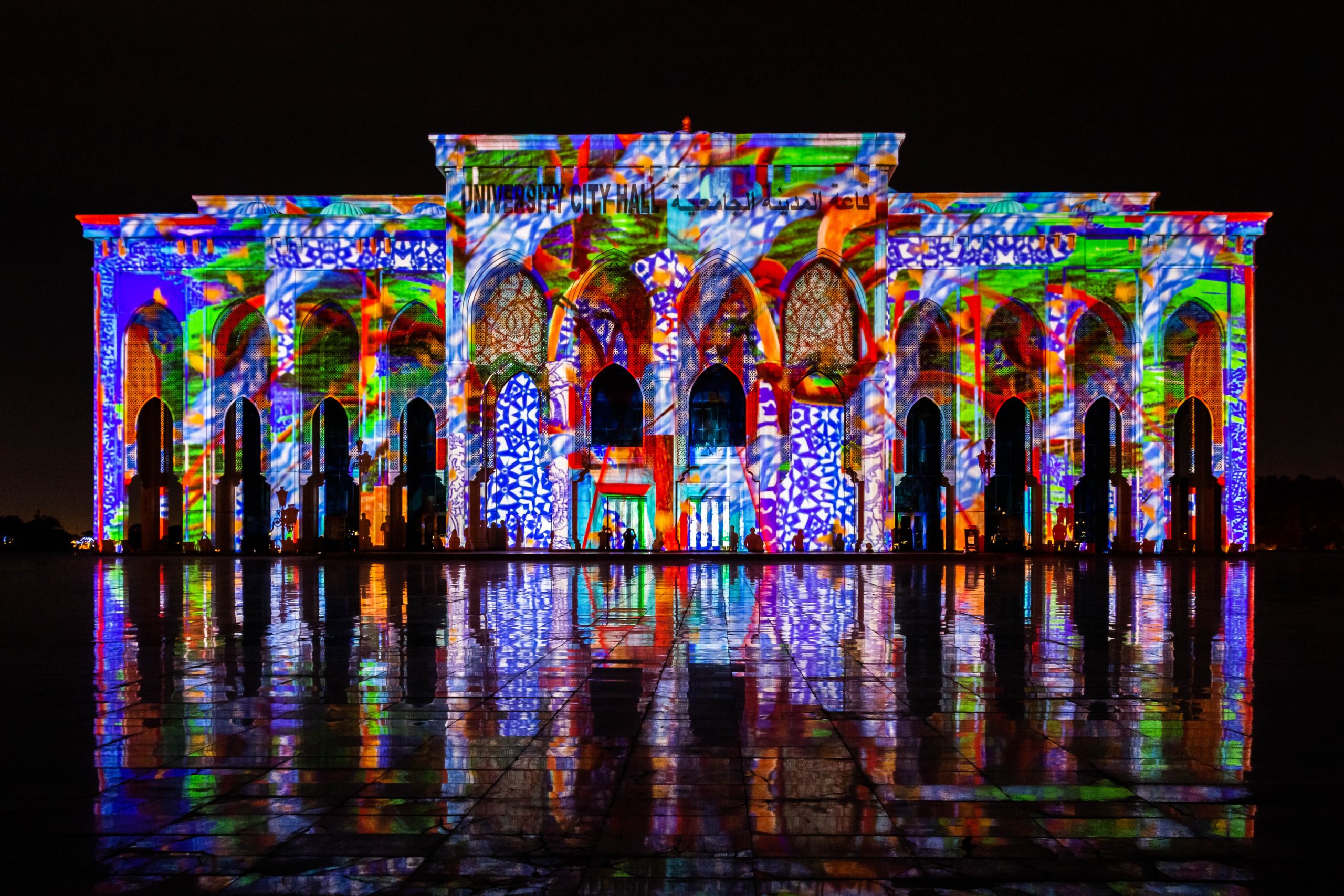
University City Hall, Sharjah, United Arab Emirates. Image credit Abrar Sharif via Shutterstock © 2019.
In its first year, the Sharjah Festival of African Literature welcomed about 10,000 visitors. For four nights, the exterior compound of University City Hall in Sharjah (the United Arab Emirates’—UAE—third-largest city) became a dense constellation of African creative expression. Panels and poetry readings bled into musical performances and culinary displays. The space throbbed with movement, sound, and celebration.
From the outside, the scene was admirable. Arab culture appeared to clasp hands with its African counterpart. Across the grounds stood African literary luminaries, smiling, clapping, visibly at ease. The triumphant atmosphere rode ecstasy like a horse. Through microphones flowed well-meaning conversations about literary kinship, bridge-building, and the need to transcend mutual and imposed stereotypes.
The festival invited a comforting illusion: that this was a revival of an older, purer moment echoing the trans-Saharan exchanges of pre-colonial days. Nothing in the spectacle betrayed calculation. Nothing hinted at underhanded power play. And that, precisely, was the point.
What once made Africa enticing to external actors did not evaporate when colonized states wrestled for formal independence from European empires in the 20th century. Diamonds, gold, natural gas, cobalt, copper, uranium, and a wide range of other raw materials continue to attract imperial interest on the continent. With multiple global and regional powers competing for influence, it is hardly surprising that some choose seduction, at the expense of others who rely on coercion.
What is interesting, however, is the particular configuration of hard and soft power the United Arab Emirates has deployed toward African states.
At first glance, the two appear diametrically opposed. Hard power signals militarized intervention, coercion, and the violent grabbing of others’ resources. Soft power, by contrast, trades in attraction and persuasion, and cultivates admiration to soften resistance.
In this context, the UAE’s growing enthusiasm for African literature and culture demands scrutiny. Against the backdrop of Emirati military, financial, and diplomatic entanglements in the Horn of Africa, particularly in Sudan, cultural overtures cannot be read as politically neutral. Does the dissonance between speech and action not merit interrogation? And how, exactly, should Sharjah’s performance of cultural solidarity be reconciled with Abu Dhabi’s documented involvement in wars that have accelerated displacement, extraction, and mass civilian death?
If history teaches anything, it is that (sub)imperial states mobilize culture strategically, rarely without an underlying material or political interest—a point long emphasized by Edward Said.
There are no empty gestures in global politics. “Assistance” and forms of “aid” rendered by one to another always come with a sealed invoice. God help the unsuspecting receiver who looks up to the benefactor with glassy eyes of praise. The same holds for many so-called trans-cultural initiatives.
Between 1960 and 1990 alone, the Soviet Union and the US, not forgetting their respective allies, cast expansive soft-power nets across Africa. They wooed, cooed, and carted off African talents in droves. Even as the millennium dawned, the only thing that changed was the absence of the Soviet Union and the presence of new foreign actors.
What Africa received, and still receives, is a carefully curated class of literary and political stewards, elevated through patronage and proximity, rewarded for pliancy, and circulated as evidence of benevolence. Except for a few like late JP Clark, who saw through the façade of the so-called cultural exchange programs, principled refusal has been rare and often costly.
Perhaps the most insidious consequence of this long history of conditioning is the recurring gravitational pull toward the West that has shaped the trajectories of African fiction since the 1970s. Even when texts are individually powerful, their protagonists frequently end up oriented toward Euro-American capitals.
Take Elvis from Graceland. He is caught between a rock and a hard place. He is poor, unemployed, and his only skill as an Elvis impersonator brings him more pitiful smiles than naira notes. No sooner does his friend Redemption usher him into the underbelly of Lagos’ life than he runs afoul of a corrupt colonel who wants him dead. And where does Elvis flee? America.
This same escapist arc, in varying degrees, cuts through the lives of other African characters as well. Darling from NoViolet Bulawayo’s We Need New Names fulfills her childhood dream of going to America. Ishmael in Ishmael Beah’s A Long Way Gone looks back from the US at his life as a child soldier. Aïssatou in Mariama Bâ’s So Long a Letter recounts her change of fortune since leaving Senegal for America. And in Helon Habila’s Waiting for an Angel, Kela, when asked about his idealist-cum-wanted teacher Joshua, paints a fantasy picture of America where Joshua is safe and “free.”
Without resorting to broad generalizations, the trajectories of texts like this are not so much evidence of a failure of imagination as they are reflections of a Western literary economy that has conditioned desire and recognition to move in a particular direction.
Despite being powerful, even searing texts, these works of African literature are shaped by the legacy of soft power, cultivated over decades through fellowships, MFA programs, residencies, and other institutional channels.
There is much to be said about the entrenched external influence that has come to pepper African literature as a consequence of this history and globalization, just as there is much to interrogate about the politics of laurels and visibility. Yet, in attempting to resolve one problem, must another be created?
Sharjah’s “investment” in African literature needs to be understood as a continuation of a very Euro-American tradition. Like these, it aims to firstly, anesthetize growing criticism against its nefarious divisive projects within the continent, and secondly, distract people’s attention.
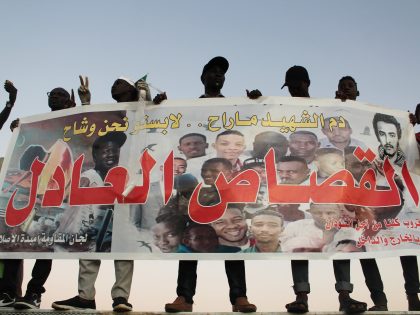
In its brief existence, this so-called celebration of African culture has failed to marshal its cultural capital in defense of the very African lives its sponsor helps render disposable. It has offered no meaningful intervention in the preservation of Libyan, Somalian, and especially Sudanese cultural life at a moment when dark-skinned Sudanese in Darfur are being systematically genocided with the material and diplomatic backing of the Emirates.
To view Sharjah as a benign, well-intentioned external patron is therefore a mistake.
Participation in its literary spectacle is not neutral. It functions, whether acknowledged or not, as a transaction. And the object of purchase is the Western and Southern African cultural approval, as the Horn of Africa gets decimated.
The Sharjah Festival of African Literature held its second edition a few weeks ago. 11,108 people graced the event. Among the event’s highlights was the Sharjah lifetime achievement in literature award. This year, it went to a prominent African woman writer. The year before, another eminent African literary icon received it. Many who attended raved about it online. There were photos, reels, and captions that swore the event was a success. But what success means, and to whom it applies, is a discourse for another day.
Pertinent for now is a singular foregrounding: That a festival cannot meaningfully applaud African creativity while its sponsor profits from African death. To demand this is to level up with the growing demands for justice, and to insist that literature, like all human endeavors, exists within material conditions that demand accountability.
If African literature is to retain its critical force and ethical relevance, it may need to find strength away from the glow of imperial stages and seek clarity in recognizing the moment when applause is being asked to stand in for acquiescence.