
The EFF will not bring the change South Africans need
Approaching local elections, beyond its spectacles of defiance and never-ending episodes of controversy, what do the politics of the Economic Freedom Fighters have to offer?
6426 Article(s) by:
Paul Milchik is a pseudonym for the author of this piece. His name has been changed due to his status as an international student in the US during the second Trump administration, in a context where foreign students have been targeted for detention and deportation as a result of expressing pro-Palestinian views.
Approaching local elections, beyond its spectacles of defiance and never-ending episodes of controversy, what do the politics of the Economic Freedom Fighters have to offer?

Ghana is slowly developing its mental health care to protect human rights. Yet sensationalist journalism, including in the progressive media, continues to portray the treatment of mental health in the country as backward and abusive.

Africa Is a Country Radio is back with a new season focused on African club culture. Our first stop is Cairo with Egyptian music journalist Maha El Nabawi. Listen on Worldwide FM.

Revisiting the films of Malian-born author and filmmaker Manthia Diawara.

Land reform should focus on justice and social transformation, not on creating a new class of black commercial farm owners.

On the next AIAC Talk, we talk with several AIAC fellows about their work. Tuesday on Youtube.

Music’s ingratiating moral mask has withered, revealing a disfigured face whose true ethical philosophy is, as Lauryn Hill once noted, “paper thin.”

In his new book, the Ugandan academic Mahmood Mamdani argues that breaking cycles of violence requires collective action. He finds hope in the unfinished project of South Africa’s anti-apartheid struggle.

Many of the continent’s most highly trained mental health professionals migrate outside Africa. The result, sadly, makes global inequalities in access to mental health, worse.
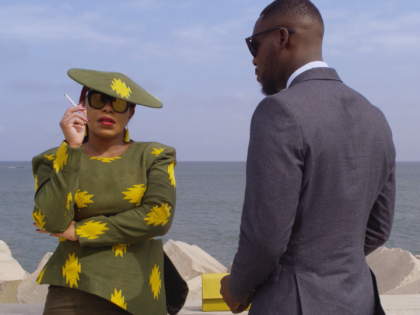
In the Nigerian film ‘La Femme Anjola,’ which delights with brilliant performances, no one is exactly who they seem.

Academic journals pride themselves on “blind peer-review.” However, what if all that’s blind is the reckoning with inherent systemic discrimination?

Julie Mehretu, an Ethiopian-American painter, defies expectations that artists of color should produce representational work.

The film Adú justly calls attention to Europe’s closed borders, but neglects to examine why people are migrating from Africa.

The increasing visibility of Qur’anic healing in Cairo intersects with psychiatry’s growing foothold in public awareness, creating fertile ground for debates about affliction, care, and expertise.

Muammar Gaddafi occupies a contested space in the histories of postcolonial Africa. What about his Libyan opponents?

The ongoing displacement and killings of minorities and the ongoing war in Tigray—labeled by the federal government as enforcing law and order—are disturbing. It can’t go on.

Nkrumah’s written works and speeches reveal a selective encounter and appropriation of tools—in this case from Marxist thought—that were translated through Nkrumah’s traveling theory.

Raoul Peck’s ‘Exterminate All the Brutes’ missed the opportunity to engage with the history of colonialism in a way that empowers viewers to imagine a future in which whiteness is not the locus of power and authority.

تكمن فرادة حالة العدمية في أفريقيا كتاريخ وحضارة وشعوب في ارتباطها المتشعب بواقع دموي عنيف من جهة وصيرورة رؤى طوباوية من جهة أخرى، كما يعبر عنه كل من رواية “ذوي الجمال لم يولدوا بعد” للكاتب الغاني ايي كواي أرما وفيلم “آخر أيام المدينة” للمخرج المصري تامر سعيد.

Oral histories conducted with women involved in South Africa’s liberation struggle offer us startlingly candid portraits of youth activism.