RIP Bi Kidude, Empress of East Africa
Bi Kidude, who died on April 17, 2013, was probably Tanzania's foremost singer and performer of Taarab music.
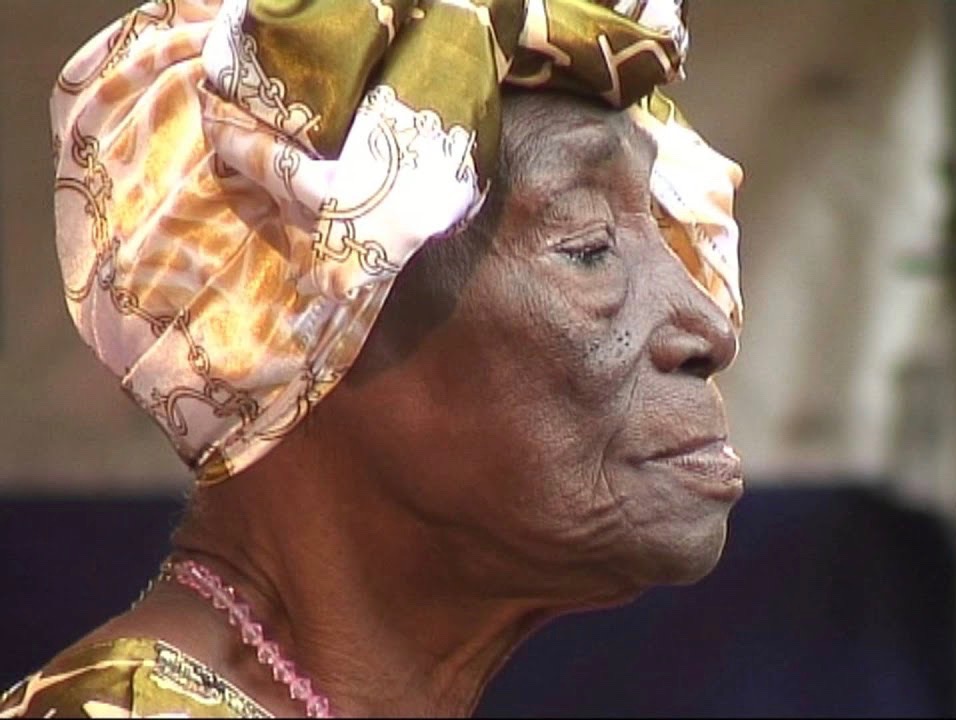
Bi Kidude. Screen grab of performance at Afrikafestival Hertme in 2009.
It was 2011 and we were preparing for TEDxDar, a local, self-organized offshoot of the global talk series. Behind schedule as always, we needed to get Bi Kidude, this iconic figure on our stage. We wanted to hear her voice and her story in an intimate way. We wanted to experience her magical presence, her Diva, on the small stage, away from the large international concerts and festivals such as Sauti za Busara where we had become accustomed to seeing her. Was she still alive we asked ourselves, for it seemed every four weeks in the previous four years there was at least one rumor of her passing. How would we even get in touch with such a legend? This authority of culture must surely be hard to find – but find her we did.
We released some fillers and finally managed to get a hold of her manager, one of her nephews at the time. And we managed to book for this icon, set to arrive in Dar es Salaam from Zanzibar. Having organized with her nephew manager, we were skeptical that the iconic Bi Kidude would be so accessible. But we realized this reality as she arrived with more spice than could be filled on an Island. Arriving at the docks of Dar es Salaam by boat, our posse went to welcome the Empress of East Africa to Dar es Salaam.
Her handshake, firm, hid all other appearances of age. “How was your boat ride to Dar es Salaam?” we asked her. In a charming way, she seemed to have misinterpreted the question. “Ahh mimi bara lizima nimeshalizunguka miguu peku . . . ” (“Ahh I have circled the whole mainland barefoot!”) She went on a diatribe about how this was not her first time on the mainland, she had in fact circled it barefoot three times before we were even born . . . She was liberating ears before TANU had even brought independence. Perhaps she understood the question exactly, but her discernment was to educate beyond small talk. DIVA.
“Tomorrow we will need you at the National Museum and House of Culture where our event is being held. We will pick you up for rehearsals.” She agreed to come and see the venue, but rehearse she would not: “Do I look like I need rehearsal?” her gaze seemed to say.
She was sitting outside the Museum veranda on event day, burning through her classical pack of Embassy cigarettes, we sat in wait – anxious. When the bell struck, she was on stage, our closing act. And close she did.
Bi Kidude is beyond a cultural icon, a national figure, an orator, a historian, a legend, her humility, her statuesque authority transcends a legacy like no other. Her loss is a great one to Tanzania and the world over though we shall not mourn but celebrate her excellency. Rest in Power, Great Empress.
Here are some videos to remember her by. In this video, we see Bi Kidude in a drum circle beating the drum with her dancers in a ubiquitous dance style of going round in a mduara (circle) and gyrating.
In “Kijiti” Bi Kidude speaks of rape and abuse. The song shows off her skills as a storyteller and composer.
Here, Bi Kidude sings one of her classics, “Muhogo Wa Jang’ombe,” where she explores themes of sex and midwifery.
And finally, “Alaminadura” (Ar. “the Universe is Round”). In Swahili there is the similar proverb “Dunia duara” (the world is round): you will come back to the starting point.