Calling Trump’s bluff
As the White House hypes “Christian genocide” and floats military action, northern Nigerians are responding with satire.
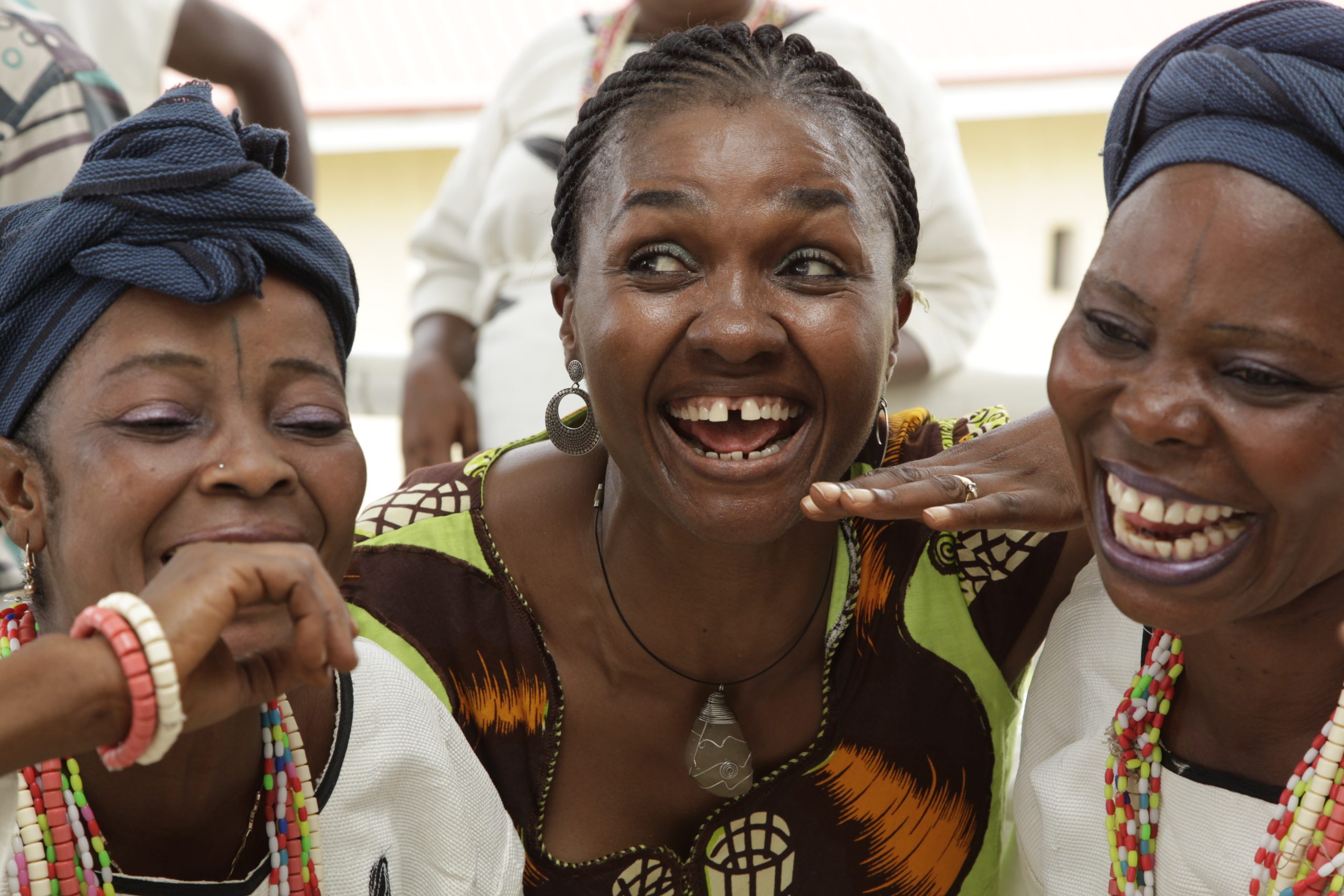
Traditional dancers from northern Nigeria. Image credit Goge Africa via Wikimedia Commons CC BY-SA 4.0.
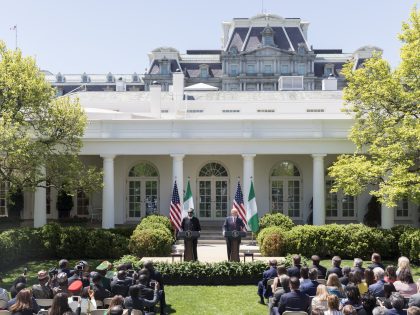
Earlier in November, President Trump threatened military action against Nigeria for allowing what has been described in right-wing media as a “Christian genocide.” This followed Nigeria’s designation as a “Country of Particular Concern,” due to its perceived tolerance of religious persecution of Christians, especially in northern Nigeria, where the population is predominantly Muslim. While Nigerian Christians have been victims of violence in an increasingly unstable Nigeria, they have shared this victimhood with Muslims, practitioners of traditional religions, and atheists, a fact acknowledged by security experts familiar with the situation in Nigeria. The Trump administration has conveniently ignored this reality as they trump up claims of Christian persecution for political reasons. Trump’s warning, supported by a concrete plan for military action, was alarming to many Nigerians.
The Tinubu administration responded with a statement condemning the United States’ characterization of events, affirming Nigeria’s religious tolerance and willingness to collaborate with the United States to address Nigeria’s security issues. Prominent northern Nigerian citizens issued a statement blaming poor leadership for insecurity in Nigeria, while calling on President Trump to withdraw the military threats issued. Members of the Shi’a community in Kano, the largest city in northern Nigeria, protested against a possible US military invasion. But perhaps the most interesting responses came from the margins, from the skits and videos circulated on northern Nigerian social media and WhatsApp networks.
With 100 million Nigerian Internet users, Nigerians are increasingly coming online to cope with their condition. The 2020 #EndSARS protests against police brutality were largely coordinated on Twitter, showing how integral online spaces are for organizing and resistance. In a lighter sense, online platforms also provide a space for Nigerians to cope through humor. Skitmakers abound on Instagram, easily gaining a following by criticizing the Nigerian system.
For Hausa people, the majority ethnic group in northern Nigeria, humor has long been a tool for advancing social critiques. Precolonially, praise singers composed satirical songs that described the excesses of emirs and lampooned enemies of their patrons. In 2015, Hausa political and pop musician Dauda Kahutu “Rarara” composed a satirical song against Goodluck Jonathan that galvanized northern Nigerians to vote for Muhammadu Buhari. His smash hit, Masu Gudu Su Gudu (Those With Cause to Flee, Should Flee), continued the historical tradition of humor as protest while utilizing radio and the Internet to reach a wider audience. Now, in the face of an increasingly belligerent United States foreign policy agenda and a Nigerian government that is passive towards addressing Nigeria’s multidimensional security issues, Hausaphone Nigerians are once again turning to the Internet to share their feelings through posts and videos that toe the line between satire and solemnity.
Thus, I wasn’t surprised when my social media feed was split between outrage against the misinformation fueling American military threats and posts criticizing the situation from a lighter standpoint. These posts focused on claims of a US military invasion and reflected a preparedness to protect Nigerian sovereignty.
In one post, a group of men pose as soldiers waiting for a superior’s orders. Standing atop a hill, they hold a “missile” crafted from cardboard, repeating, “Umarnin ka kawai mu ke jira” (We’re just waiting for your orders [to fire]). They fidget with the controls, preparing the missile to fire as they wait for orders. Finally, the superior calls, and they answer, assuring him that they are ready for action. Then comes the plot twist: they’re told that the Americans have decided against firing and that they should deprogram the missile. They conclude that the Americans must have been scared and given up.
Will Nigeria call America’s bluff? This skit certainly hopes so. While American officials have called for military action and have repeatedly taken steps to manufacture consent for (eventual) military action, they have not moved towards action, perhaps in fear of a protracted military engagement, given the multifactorial nature of Nigeria’s state of unrest.
Another video takes America’s threats of military action more seriously. A local malam (Islamic teacher) is shown preparing Qur’anic litanies and amulets against the American forces. Almajirai (Islamic school students) sit cross-legged, and on top of their heads are tablets filled with Arabic writing—most likely Qur’anic verses. As the malam goes around placing herbs on top of the tablets, he states, “Ai tunda suka taba Hausawa, ai sun halaka” (Since they [the Americans] have come for Hausa people—here standing in for the broader northern Nigerian populace—they will not prevail.)
Here, the malam demonstrates the spiritual dimension of Nigerian resistance against American neoimperialism. Hausa and Fulani Islamic scholars have been integral to resistance movements in northern Nigeria and the diaspora. Across the Atlantic in Bahia, Brazil, enslaved Hausa Muslims participated in the 1835 Malê revolt using amulets to protect them as they fought against slaveholding powers. In 1903, the then Sarkin Musulmi (Commander of the Faithful), Sultan Muhammadu Attahiru I, led a resistance against the British, which ultimately led to his death. The same theological understandings guide Hausa Muslims today, as they turn to Islamic cosmology for protection in the face of an impending neocolonial encroachment.
Uncertainty clouds Nigeria’s future as the United States escalates claims of Christian persecution to the United Nations, and wanton killings and civilian abductions continue with no end in sight. Wherever Nigeria is headed, these posts show a willingness among northern Nigerians to counter American propaganda and defend against neoimperialist intrusions on their region and country.