The debts our parents left us
The language of fiscal consolidation is meant to sound inevitable. But for Kenya's informal workers, the human cost is anything but abstract.
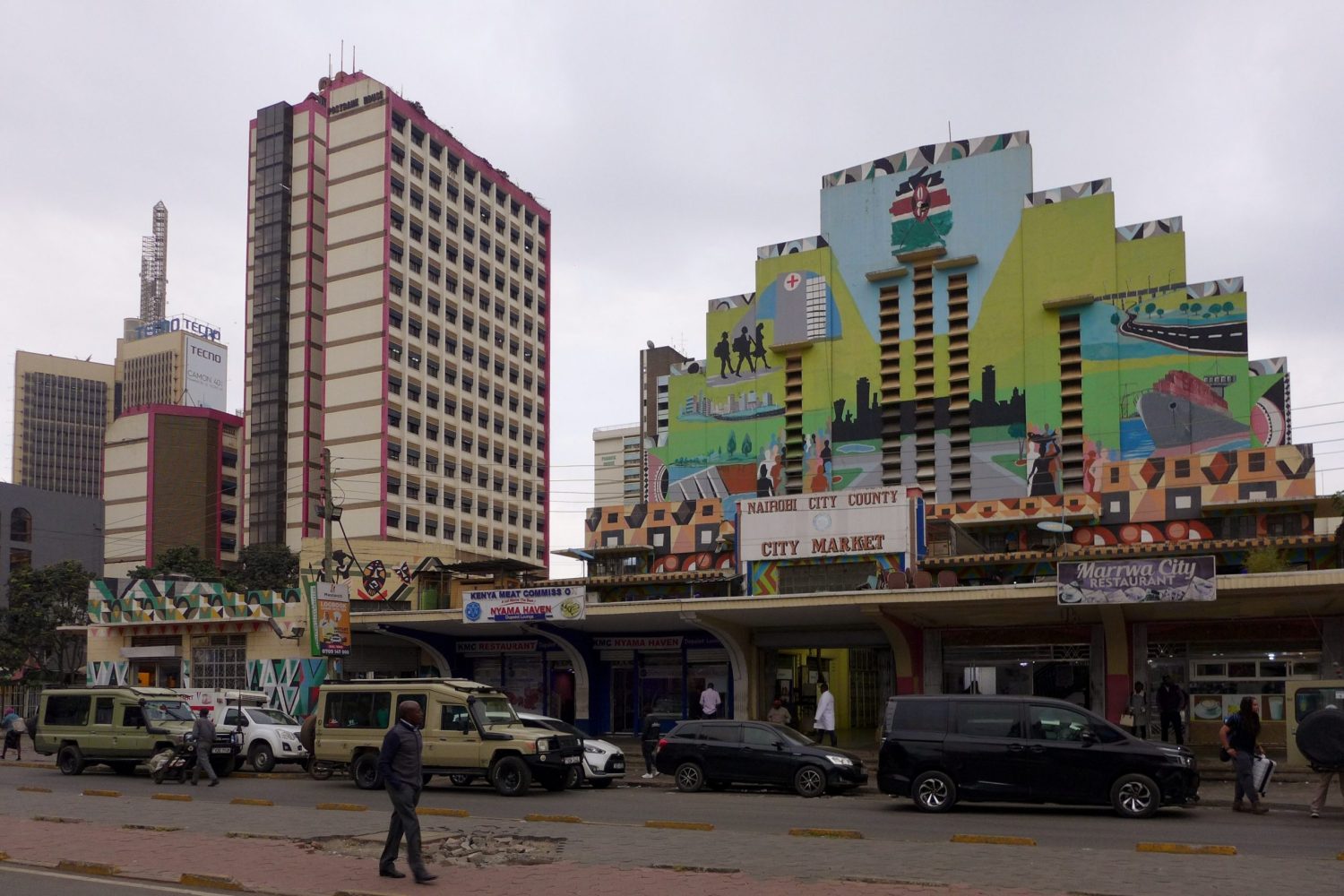
Nairobi City Market, Kenya, August 2025. Image via Wikimedia Commons CC BY-SA 4.0.
The language of economic policy is designed to obscure. Fiscal consolidation sounds responsible, even prudent. “Structural adjustment” suggests repair, improvement, and optimization. “Widening the tax base” evokes democratic participation, a broadening of civic duty. These are the euphemisms that dress violence in the rhetoric of necessity.
I learned this first not from reading economic theory but from watching my bank account. In September 2022, when President Ruto took office, I was an undergraduate freelance content creator, one of thousands of young Kenyans who had found in the digital economy what some in our parents’ generation found in the informal sectors that bloomed in the ‘90s: a livable, though precarious income, a sense of purpose, the possibility of a future. Within two years, that possibility has been systematically dismantled by a series of tax measures that transformed my modest earnings into a labyrinth of deductions, each one justified by prescriptions handed down by International Financial Institutions and donors.
In the early ‘90s, the government fired civil servants and called it restructuring. Thirty years later, the gig economy is similarly being dismantled through austerity measures in the name of widening the tax base. The mechanism differs, but the outcome is identical. Both times, an entire generation found the ground beneath them removed by policy, their livelihoods sacrificed at the altar of International Monetary Fund conditionalities.
The late African economist Professor Thandika Mkandawire once described the Structural Adjustment Programs (SAPs) imposed on Africa in the 1980s as the Great African Depression. Due to Kenya’s highly accruing debt, the IMF and the World Bank imposed SAPs as a condition for receiving further financial aid, forcing the country to adopt neoliberal policies by prioritizing export markets and drastically cutting social spending on public services. The SAPs intended to create rapid and sustainable economic growth, but instead precipitated widespread unemployment as public-sector jobs were slashed. Those who fled to the burgeoning informal sector had to contend with its precarity and low wages, their plight exacerbated by the overnight collapse of social systems as essential services became inaccessible to many due to the removal of subsidies and increased user fees. Cost sharing became mandatory, resulting in higher dropout rates and reduced access to medical care, especially for the proletariat and rural populations. Before the advent of SAPs, the state financed the entire university education, including providing students with a “boom” allowance for personal effects. The 1991 implementation of SAPs required undergraduates to pay KSh6,000 (50 USD) per year as part of a newly introduced, non-negotiable student loan scheme, signaling the end of the “boom” allowance. This policy change was met with fierce resistance, leading to student protests and the closure of Moi and Kenyatta Universities. It heralded the new era where now, decades later, students either fund themselves through campus, or bear the weight of student loans.
My father, who had finished secondary school a year earlier, had harbored dreams of higher education and social mobility, only to watch his dreams snuffed out: the cost-sharing policy proved too steep a cliff for my ailing grandfather to scale, given he had invested his retirement package in my aunts’ and uncles’ secondary school education. So my father did what the economy required of the young and ambitious; he improvised.
Arriving in Nairobi in ’92, my father found work in Industrial Area, among the plastic and chemical factories that line Enterprise Road. He initially intended it to be a detour on the way to something better. But the 1990s had other designs. The same SAPs that had restructured university funding were simultaneously dismantling the formal sector he hoped to enter. Parastatals were privatized or dissolved. The civil service contracted. The stable jobs with pensions and predictable trajectories—the jobs that had built Kenya’s middle class in the Kenyatta years—were now artifacts of a previous economic era, like rotary phones.
The factory job became permanent in the way that temporary things do when there are no alternatives. He has worked there for thirty years since, breathing in plastic fumes, operating the same machines, watching younger men arrive with the same desperate optimism he had carried. Some saved enough for a boda boda, a small kiosk. Most didn’t. The private sector, structured on contracts predicated on fluctuating markets and thus prone to mass layoffs even then, seemed to offer no formal path forward, only lateral movement, only survival.
I think about this often now—the way history doesn’t merely repeat but rhymes, the way the children inherit the debts of their fathers, literally and metaphorically. When I entered university in 2020, I did so under the same cost-sharing system that had excluded my father, although by then it had reformed, expanded, and become slightly more accessible. I qualified for a loan. This felt, at the time, like progress.
The loan covered tuition and part of the upkeep, but the upkeep is a euphemism that doesn’t account for the actual cost of existing in Nairobi—rent in the overcrowded neighborhood near campus, food, transport and the textbooks that lecturers require but that the library doesn’t stock. The gap between what HELB (Higher Education Loans Board) provided and what survival required was wide enough to swallow ambition whole. So, I too, improvised.
The informal sector had evolved by the time my generation came along, had gone digital, had acquired new vocabularies of precarity. I wrote articles for content mills at three dollars per thousand words. I designed graphics on Fiverr. I transcribed audio files for Indian platforms that paid per task, not per hour, a distinction that proved significant once the tasks dried up, or the rates dropped. I learned to navigate Upwork, Mpesa, PayPal, the contemporary infrastructure of hustle. The gig economy became our refuge where we could still harbor dreams of social mobility in that digital frontier to which the government’s reach had not yet extended.
I graduated in 2024 with a degree and a debt that I’ll be repaying for years, probably a decade. The loan accumulates interest at rates that feel punitive given the job market I am entering—or rather, not entering—since the formal sector continues to contract, with AI automation and austerity combining to eliminate entry-level positions. But I had a laptop, an internet connection, and a PayPal account, and that seemed enough to suggest I could navigate this new phase of my life, this new frontier of “adulting”. The sense that if I worked hard enough, fast enough, I could make it work.
That was before they decided we needed to be taxed. The IMF’s Extended Fund Facility (EFF) and Extended Credit Facility (ECF) arrangements, which were initiated to address debt vulnerabilities and the economic shocks following the global pandemic—US$2.34 billion over 38 months—arrived wrapped in the language of necessity and inevitability. With the facilities came the familiar prescriptions: Kenya must consolidate its fiscal position. Revenue must increase. Expenditure must decrease. These are not political choices but mathematical imperatives.
However, mathematics can be ideological. The decision to increase revenue through taxation rather than through repatriating stolen wealth, the choice to decrease expenditure by cutting subsidies rather than by reducing corruption, these are political acts disguised as technical ones. When fuel subsidies were removed and VAT on fuel doubled, the cost was not borne equally. The wealthy absorbed the increase. The poor and the precariously employed—which is to say most of us—saw our margins of survival narrow to slivers.
Let me be clear: I’m not opposed to taxation in principle. I understand that governments need revenue, that we all have obligations to the collective. What I oppose is the particular arithmetic of this taxation, the way it’s been calculated to extract maximum revenue from minimal resistance. We’re easy targets, we freelancers and gig workers. We don’t have unions or lobbying groups or parliamentary representation. We’re scattered, atomized, connected only by WhatsApp groups where we share screenshots of unpaid invoices and commiserate about client ghosting. We exist in a legal gray zone where employment law doesn’t quite apply, and tax law applies too much.
The Significant Economic Presence Tax was the first blow. Three percent doesn’t sound like much until you realize it’s three percent on top of everything else, three percent that foreign platforms are now obligated to withhold before they pay you, three percent that assumes you’re earning enough for three percent to be negligible. For someone making $500 a month—which is a good month, an excellent month, a month where everything went right—that’s $15 gone immediately. In a country where $15 can be transport for a week or data bundles for a month, or the difference between eating and not eating enough, 3 percent is not negligible.
Then came the Digital Content Monetization Tax, which is perhaps the most elegantly cruel piece of fiscal policy I’ve encountered. It targets the dream itself—the possibility that your YouTube channel or Instagram account, or TikTok videos might generate income. Never mind that for every influencer making millions, there are ten thousand making minimal dividends to nothing at all, posting into the void, hoping. The state has looked at this landscape of hustle and aspiration and decided it needs a cut.
Five to twenty percent, depending on your earnings bracket, which means the more successful you are at this precarious endeavor, the more you’re punished for succeeding. It’s a tax on hope, essentially. A tax on the idea that you might, through creativity and sheer force of will, build something that sustains you.
And then there’s SHIF. The Social Health Insurance Fund, uncapped, ambitious in its vision of universal healthcare and devastating in its execution. In theory, it’s beautiful; everyone contributes, everyone benefits, healthcare for all. In practice, it’s another deduction from an already decimated income. For salaried employees, it’s manageable—deducted automatically, matched by employers, spread across monthly earnings, although there have been reports of subpar performance. For us in the gig economy, it’s chaos. How do you calculate contributions on irregular income? What do you do in the months when there’s no income at all?
Terry could tell you more about SHIF than I can. I met her last December in Bungoma through a friend of a friend’s sister. Terry runs a small business, importing goods—clothes, shoes, accessories—from Uganda through the Malaba border to sell in the local Bungoma town market, Chepkube. She has managed to raise her three children mostly on her own, and recently she was blessed with an infant daughter. She’s exactly the kind of informal entrepreneur the government claims to support with its hustle fund rhetoric, its NYOTA loans, and its promises of bottom-up economics.
When her daughter developed a fever that wouldn’t break, Terry took her to the local dispensary. They referred her to the district hospital—the fever was high, the baby was listless, it needed further investigation. At the hospital, they asked for her SHIF number. She gave it. They asked for her employment details. She explained: informal sector, self-employed, irregular income. They told her she SHIF did not work for non-civil servants seeking outpatient services—she needed to be admitted first.
Terry paid out of her pocket. Four thousand shillings for tests and consultation, and medication. Four thousand shillings meant for restocking her clothes inventory. Four thousand shillings meant to cover her daughter’s needs for a month. The baby recovered, thank God, but Terry’s business was set back a few months. She’s still trying to recover what that emergency depleted.
This is what they meant by “widening the tax base”: finding new people to extract from, new populations to monetize, all while providing none of the services that taxation is meant to fund. It’s taxation without representation, without infrastructure, without healthcare, without education—taxation as pure extraction, as punishment for the crime of trying to survive. And what does the government offer in return? Hustler Funds, the NYOTA program—the former, small loans with high interest rates, the latter, a mentorship and grant program supported by the World Bank. Terry was a beneficiary of the hustler fund at its inception. However, the rising cost of living—driven by the removal of maize flour subsidies and the spike in fuel prices—meant her business margins had evaporated. The loan, rather than providing capital for growth, became another debt obligation. This is the 21st-century version of the “golden handshake” they gave civil servants in 1993 when they retrenched them en masse under similar IMF pressure.
What haunts me the most are the students I encountered at my alma mater, pursuing the same degree I completed a year ago. Under the old HELB system, the state aimed to cover 80 per cent of the cost of each degree programme, and in my case, as a government-sponsored student, tuition fees were capped at KSh16,000 a semester, totalling about KSh22,000 (170 USD), inclusive of other statutory fees. I could fund my education well enough with a loan of KSh19,500 (150 USD): KSh4000 for tuition, KSh15,500 for upkeep. With a plethora of part-time jobs supplementing me, I managed. Under the new model, universities charge the full market rate for degree programmes. Now, for a Bachelor of Science in Telecommunications and IT, the annual fee is set at KSh245,950 (1900 USD). The Universities Fund (UF) provides scholarships, while HELB provides loans. The allocation is determined by the Means Testing Instrument (MTI), a tool designed to categorize students into five “bands” based on their level of need. While the model is presented as a progressive reform, students placed in the most vulnerable category are now required to make a 5 per cent household contribution towards tuition, in addition to other levies and accommodation costs. For higher bands, the financial requirements become prohibitive for the average Kenyan families, particularly those whose children have been wrongly placed due to flaws in the MTI assessment.
One student told me he was considering dropping out to work online for a while as a freelance content writer. I didn’t have the heart to tell him that the gig economy he was fleeing towards was collapsing under the same policy regime that had made her education unaffordable. The trap was perfect: education has become inaccessible, and the informal work that might have paid for it was being taxed into oblivion.
I often think about David Ndii’s comment about the IMF: “When the IMF comes knocking, it essentially means the country is under receivership.” The metaphor is precise. In receivership, the interests of the creditors supersede those of stakeholders. This is the condition we inhabit: a country in receivership, where the IMF’s conditions take precedence over the survival of the population, where social investment is redefined as fiscal irresponsibility, where the gig economy—our last refuge—is being dismantled in the name of monetization.
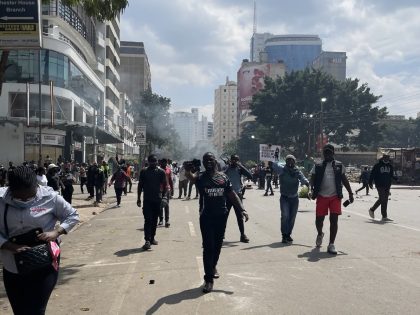
But receivership is a legal status, not a natural condition. It is imposed and can be challenged. The demonstrations of 2024 were an assertion of this possibility, a refusal to accept the inevitability narrative. They were suppressed, but the questions they raised remain. Can we imagine an economy that serves the people who inhabit it rather than external creditors? Can we conceive of fiscal policy as an instrument of social welfare rather than extraction? Can we challenge the state of affairs we have accepted up to now? These are survival questions. For those of us being fiscally retrenched—forced out of our livelihoods by policy disguised as mathematics—the answers will determine whether we have a future in this country at all.
The language of economic policy is designed to be obscure. Our task is to make visible what that language hides: the human cost of austerity, the political nature of supposedly technical decisions, the violence of policies that dismantle livelihoods. This essay is one attempt at a work of revelation. It won’t be the last.