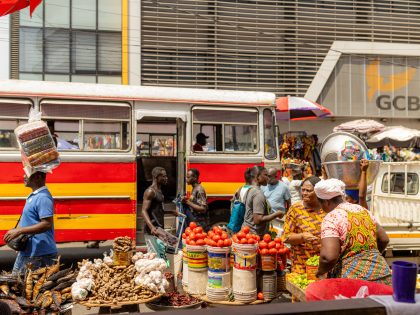
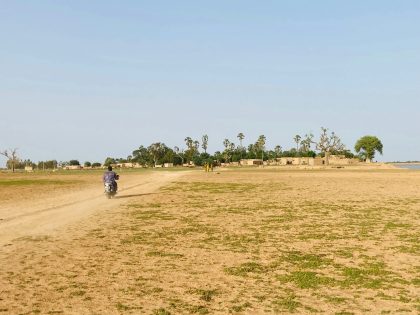
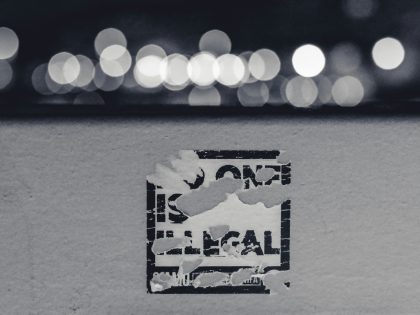
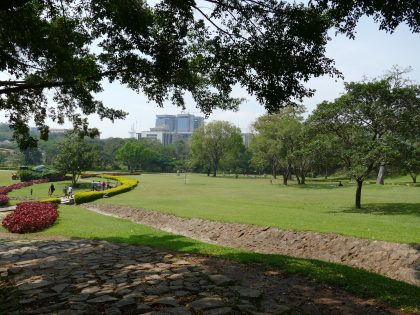
This photograph of Soccer City, the venue for the opening and closing games of the 2010 World Cup in Johannesburg by the young Johannesburg photographer Sabelo Mlangeni, is included in the ambitious exhibit: “Afropolis. City, Media, Art: Urbanization Africa, now showing through March 11 at the Rautenstrauch-Joest-Museum in Cologne, Germany. The exhibit focuses on Cairo, Lagos, Nairobi, Kinshasa, and of course Johannesburg. Mlangeni’s contribution is entitled “Untitled – The Year 2010,” and consists of a series of photographs  created in June/July 2010 for Afropolis. According to the museum PR it “… captures moments beyond and after the turmoil and excitement of the World Cup.” More information here.
Further Reading

Slow death by food

Illegal gold mining is poisoning Ghana’s soil and rivers, seeping into its crops and seafood, and turning the national food system into a long-term public health crisis.

A sick health system

The suspension of three doctors following the death of Chimamanda Ngozi Adichie’s son has renewed scrutiny of a health-care system plagued by impunity, underfunding, and a mass exodus of medical professionals.

Afrobeats after Fela

Wizkid’s dispute with Seun Kuti and the release of his latest EP with Asake highlight the widening gap between Afrobeats’ commercial triumph and Fela Kuti’s political inheritance

Progress is exhausting

Pedro Pinho’s latest film follows a Portuguese engineer in Guinea-Bissau, exposing how empire survives through bureaucracy, intimacy, and the language of “development.”

The rubble of empire

Built by Italian Fascists in 1928, Mogadishu Cathedral was meant to symbolize “peaceful conquest.” Today its ruins force Somalis to confront the uneasy afterlife of colonial power and religious authority.