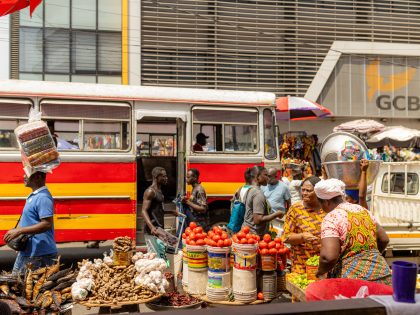
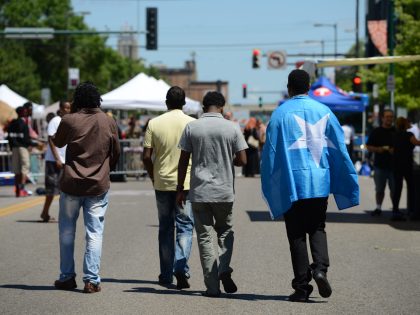
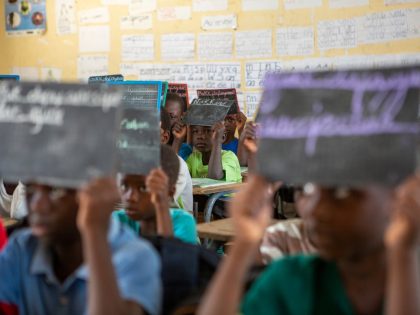
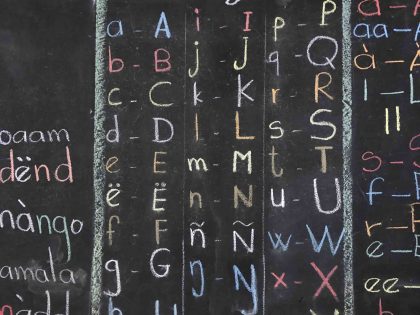
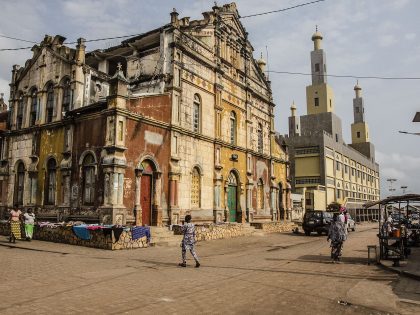
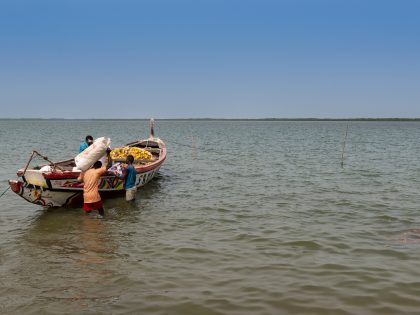
For over two decades, West African Muslims from the Murid Sufi Brotherhood come together at the annual Cheikh Amadou Bamba Day march in Harlem, New York. Scholar Zain Abdullah calls it “a major site where they redefine the boundaries of their African identities, cope with the stigma of blackness, and counteract an anti-Muslim backlash”. Mamadou Diouf (in his preface to ‘A Saint in the City: Sufi Arts of Urban Senegal’) considers Bamba’s message an “unfinished prophecy”. Above and below are photographs Marguerite Seger took during the parade in July 2010.*

* Marguerite Seger is a New York based photographer of Sri Lankan and French decent, born and raised in Sweden. Her photography, she writes, “is versatile yet with a strong personal style”. Seger has exhibited regularly the passed years both in solo and group shows. She describes her work as “urban, raw, yet romantic”, shooting anything from MMA fighters to jeans ads, music videos, boxers and short films. More of her photographs here and here.


Further Reading

Slow death by food

Illegal gold mining is poisoning Ghana’s soil and rivers, seeping into its crops and seafood, and turning the national food system into a long-term public health crisis.

A sick health system

The suspension of three doctors following the death of Chimamanda Ngozi Adichie’s son has renewed scrutiny of a health-care system plagued by impunity, underfunding, and a mass exodus of medical professionals.

Afrobeats after Fela

Wizkid’s dispute with Seun Kuti and the release of his latest EP with Asake highlight the widening gap between Afrobeats’ commercial triumph and Fela Kuti’s political inheritance

Progress is exhausting

Pedro Pinho’s latest film follows a Portuguese engineer in Guinea-Bissau, exposing how empire survives through bureaucracy, intimacy, and the language of “development.”

The rubble of empire

Built by Italian Fascists in 1928, Mogadishu Cathedral was meant to symbolize “peaceful conquest.” Today its ruins force Somalis to confront the uneasy afterlife of colonial power and religious authority.

Atayese

Honored in Yorubaland as “one who repairs the world,” Jesse Jackson’s life bridged civil rights, pan-Africanism, empire, and contradiction—leaving behind a legacy as expansive as it was imperfect.

Bread or Messi?

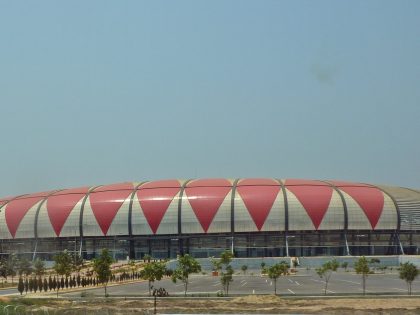
Angola’s golden jubilee culminated in a multimillion-dollar match against Argentina. The price tag—and the secrecy around it—divided a nation already grappling with inequality.