The politics of translation
The film, "Veejays," comes across as an earnest attempt to learn about the ways people are remixing dominant culture industries to make their own.
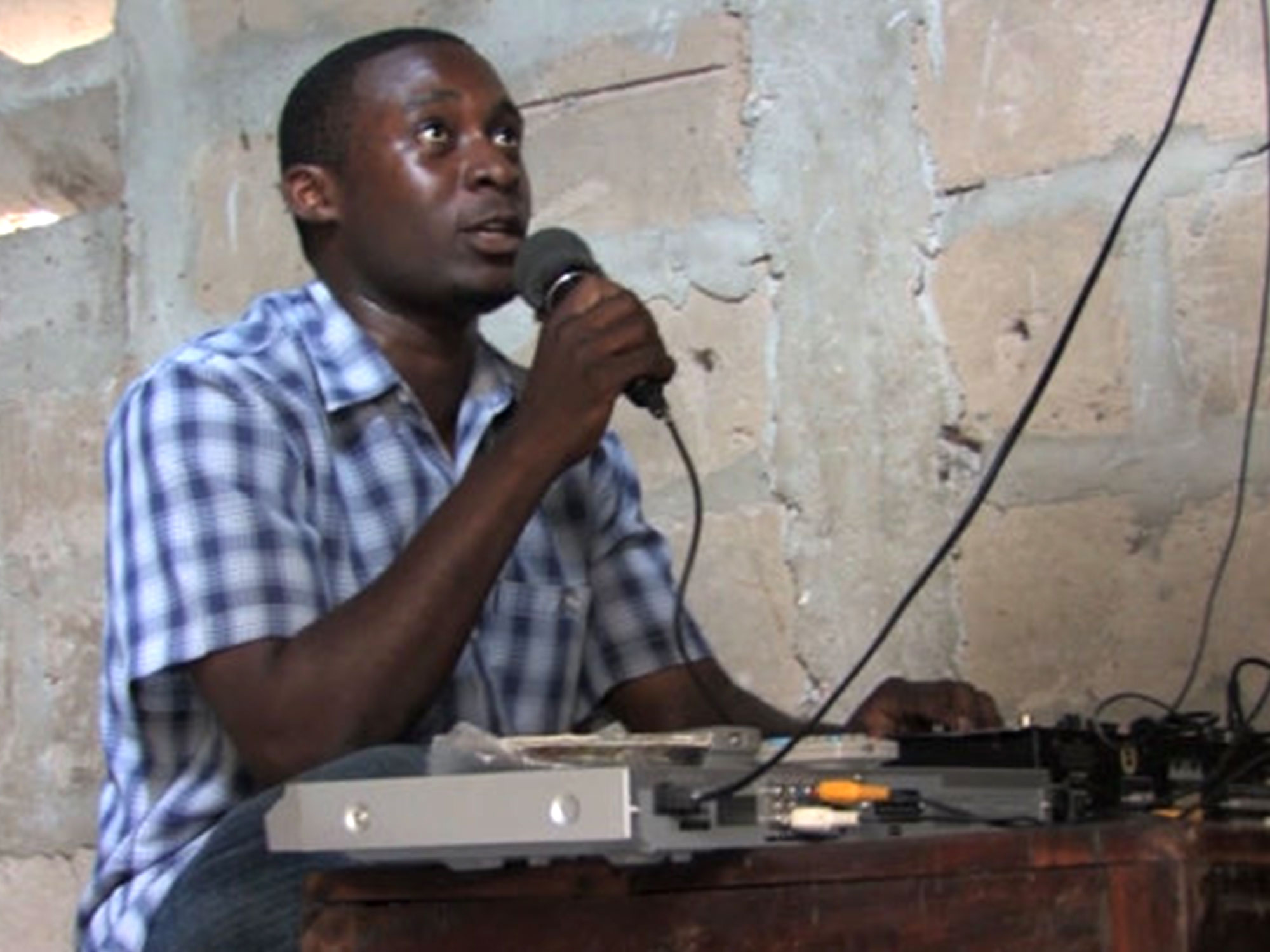
A still from “Veejays.”
In Tanzania, men who translate and narrate popular European, Indian and Nigerian movies into Kiswahili the national language of the country are known as veejays or VJ’s. The translations happen in front of the audience usually watching in small theaters in Tanzania’s cosmopolitan centers like Dar es Salaam.
My first thought was wow; some anthropologists went to Tanzania to make a documentary about the politics of translation and made something a lot more fun. The film, “Veejays”, is the inside story of two of these translators slash narrators, Lufufu and DJ Mark.
Portraits of the VJs as established masters and scrappy upstarts respectively are stitched together from a series of interviews with veteran promoters, fans, and their rivals. The biggest question—when are you satisfied with your work? and, what would you rather be doing—are directed at the VJs themselves. They also give studio tours and interviews, talking warmly about the kind of details and explanations they add to help their audiences contextualize the films. For example, that Titanic scene of Kate Winslet dancing down in steerage. (And make us think about the explanations we’ve seen authorized before.)
Veejays comes across as an earnest attempt to learn about the ways people are remixing dominant culture industries to make their own. Cameras follow interviewees’ instructions to see tools of the trade, personal libraries, and demos. Quiet cuts and tight frames assure our attention. But it is also an ambitious project; made for the big screen. Long shots of the audience at live performances inside small, sandy theaters in Dar es Salaam face out into another audience in an impossible act of seeing.
Like classic anthropologists, the filmmakers Carvajal and Gross keep their international film crew out of their shots. Their panoramic views are what make this demented mirror work but also leave us to wonder who is calling the shots during the shoots. (Who is being told to stand where?)
Happily, the organizers at Film Africa have scheduled a guest VJ performance, promising to push the vanguard of global pop culture consumption. You should be there, especially if you are already in London.
Africa is a Country is a media partner of Film Africa, the UK’s largest annual festival of African cinema and culture (starting in November 2012 for 10 days showing 70 African films) in London. Veejays in Dar es Salaam screens Sun, 4 November 2012, 12:00pm Rich Mix