South African Low-Fi Freedom
A group of artists attempt to democratized the image of the country's past through ripping clips off Youtube to re-author what South Africans once knew.

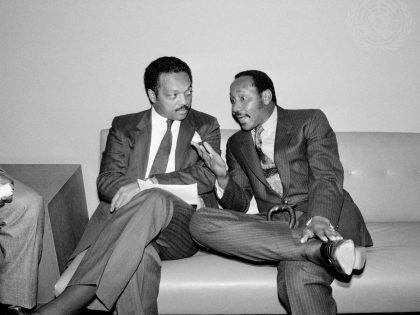
Image by UN (via Flickr CC) of Apartheid in South Africa, New Year's Day, 1982.
South African video footage has been freed from the annals of the archives housing our past on VHS. A remix of South Africa’s past and present day is now available in a low-fi video clip collection from CUSS — a group of young Johannesburg artists including Ravi Govender, Jamal Nxedlana, Bogosi Sekhukhuni and Zamani Xolo — on their free-to-air channel, and even more directly to the public in the myriad of TV-selling stores in Johannesburg’s inner city.
CUSS, among other things, subverts the closely guarded collective memory of South Africa’s 90s and takes standard definition video/images as a starting point. They help to remind us of what we know (that 90s TV talk show) and what we more recently barely got to know (that Spear painting). It’s a comment on what’s in the media today, catching throwaway comments that could be lost in the brevity of an un-taped local breakfast show:
Remixed in rainbow colors is a dismissal of the rainbow nation for all the grey areas in the picture, as well as an attempt to find out where the picture does come together:
Pointing fingers at our middle class-ness is also part of the offering of self-reflexive video speak, in an age where “I’ve got to have it!” sets the precedent:
Here is a group of artists who have democratized the image of our past through ripping clips off Youtube to re-author what we once knew. It’s incendiary and strikes chords very close to home for those of us under-30 near the mark of South Africa’s 20-years of democracy.
We were just kids in the 90s, listening in on the excitement of our parents and singing along to the SABC catch phrase: “Simunye, oh, we are one!” Now, we are still one, I think, only less optimistic. That’s Mzansi for sure.