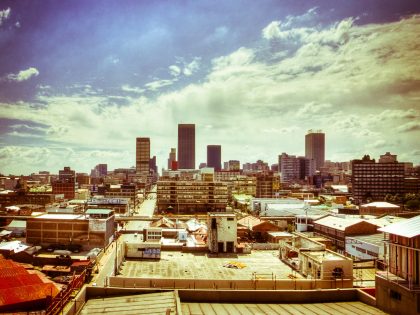
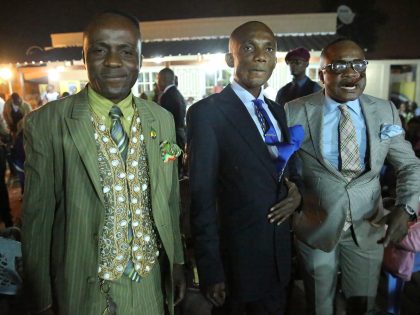
This is not Pantsula

Sbujwa is a South African dance described as a dance that requires every muscle in your body to work in order to complete the moves.
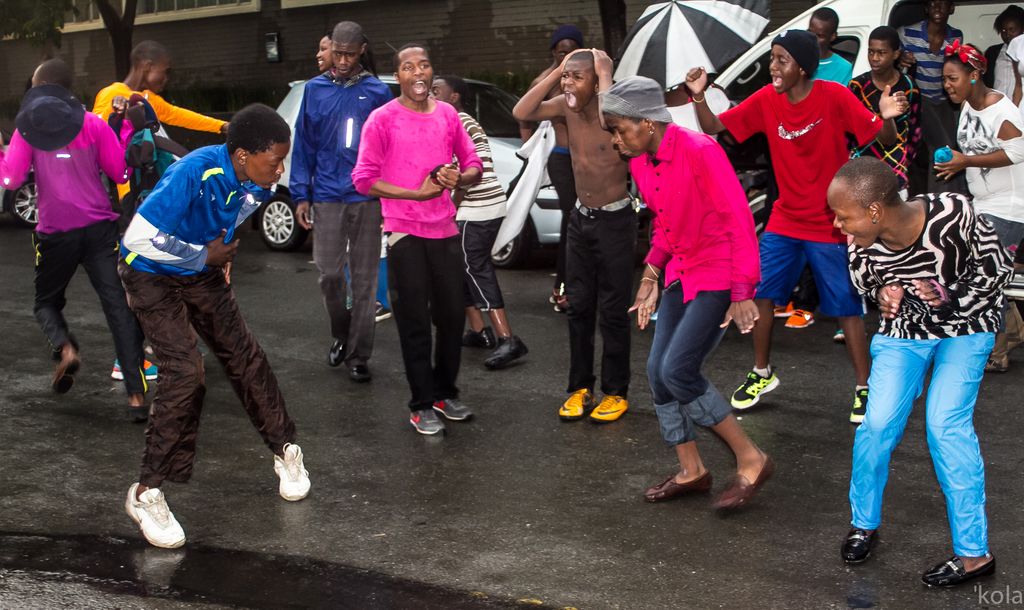
Images by Bukola.

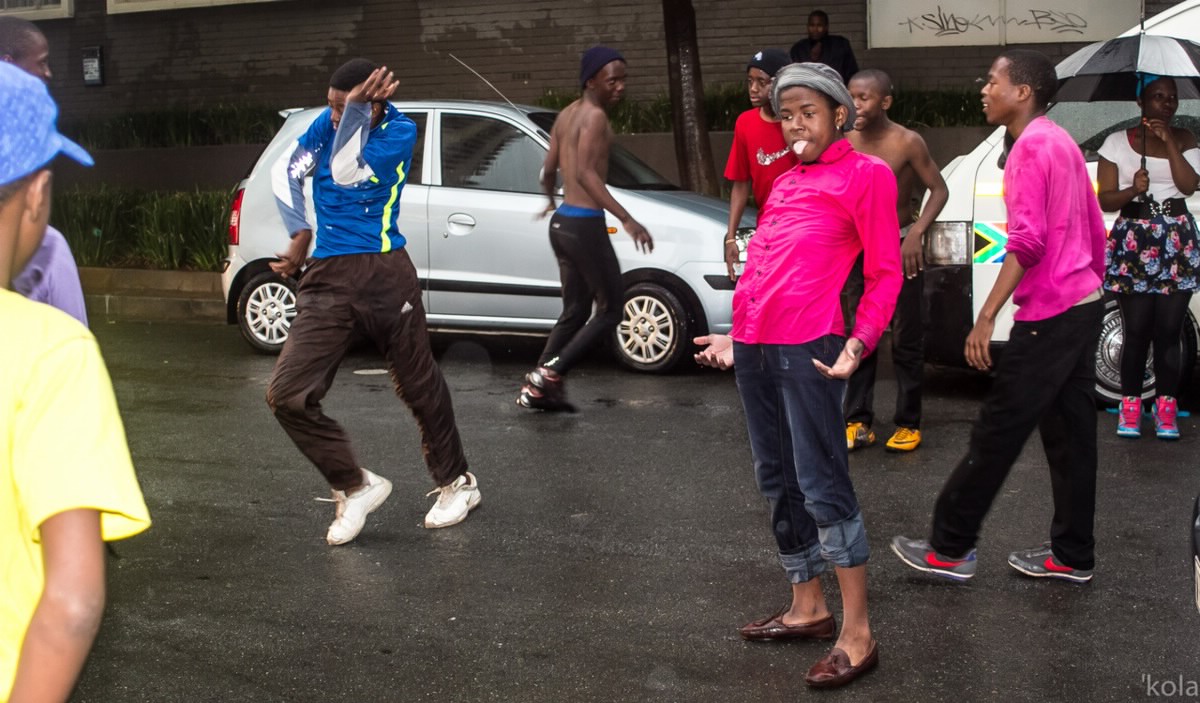
Recently, when I visited Johannesburg in Johannesburg, I got quite the treat. I was about to jump into a cab when this van pulls up and out piled these colorfully clad kids. With their exit came the loud blasting house sort of music; then the dance moves, taunting, shouting matches, some alcohol, and street fashion, but at the end of the day, it was about the dance. I was mesmerized, to say the least. A quick inquiry informed me that the phenomenon I was witnessing is called “sbujwa” — apparently not a new sight in the city. It is described as “a dance that requires every muscle in your body to work in order to complete moves” plus lots of creativity. There are differing views as to its origin, as seen here and here. Wherever it might have originated from, it was a delight to watch.

I found a short documentary on sbujwa on YouTube.

I’m hoping some “anthropologist” might be interested in researching and explaining this and other street dancing phenomena in Johannesburg. Here are some images I took of the dance. You’ll find the rest of my photos here.
Further Reading

Slow death by food

Illegal gold mining is poisoning Ghana’s soil and rivers, seeping into its crops and seafood, and turning the national food system into a long-term public health crisis.

A sick health system

The suspension of three doctors following the death of Chimamanda Ngozi Adichie’s son has renewed scrutiny of a health-care system plagued by impunity, underfunding, and a mass exodus of medical professionals.

Afrobeats after Fela

Wizkid’s dispute with Seun Kuti and the release of his latest EP with Asake highlight the widening gap between Afrobeats’ commercial triumph and Fela Kuti’s political inheritance

Progress is exhausting

Pedro Pinho’s latest film follows a Portuguese engineer in Guinea-Bissau, exposing how empire survives through bureaucracy, intimacy, and the language of “development.”

The rubble of empire

Built by Italian Fascists in 1928, Mogadishu Cathedral was meant to symbolize “peaceful conquest.” Today its ruins force Somalis to confront the uneasy afterlife of colonial power and religious authority.

Atayese

Honored in Yorubaland as “one who repairs the world,” Jesse Jackson’s life bridged civil rights, pan-Africanism, empire, and contradiction—leaving behind a legacy as expansive as it was imperfect.

Bread or Messi?

Angola’s golden jubilee culminated in a multimillion-dollar match against Argentina. The price tag—and the secrecy around it—divided a nation already grappling with inequality.