Cavemen among us; but not in Africa
Researchers find Europeans and Asians share 1% to 4% of their nuclear DNA with Neandertals. But Africans do not. What to do with this information?

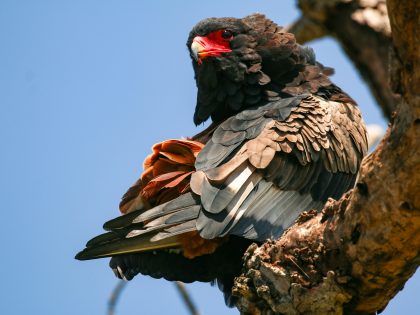
Image credit Maarten Elings via Flickr.
A scientist friend of mine alerted me to some very interesting, and controversial, developments in her field recently. From the latest issue of Science Magazine: “… an international team of researchers presents their first detailed analysis of the draft sequence of the Neandertal genome, which now includes more than 3 billion nucleotides collected from the bones of three female Neandertals who lived in Croatia more than 38,000 years ago. By comparing this composite Neandertal genome with the complete genomes of five living humans from different parts of the world, the researchers found that both Europeans and Asians share 1% to 4% of their nuclear DNA with Neandertals. But Africans do not.”
Now, let’s not everybody get excited.
I am not a scientist so I cannot speak on what the implications of this research are, or what it means, or whether it is even valid. The study, in any case, seems to be incomplete. So it could, after all, mean nothing. But “science” is sneaky like that (see: history of racial classification). And it doesn’t help that an article on the subject in The Washington Post* implies that while Neanderthals and modern humans are almost as closely related as today’s ethnic groups are to each other, the differences between them may be important. Do what you will with that information, but one can only imagine what this could mean for how we will classify those who are now considered to be 4% Neandertal. If the first thought in your head had to do with those Geico commercials, I won’t blame you. They now seem particularly apropos.
Of course, what interests me most is that this group (for now) doesn’t include Africans. So for this moment—while I still have it—I’d just like to focus on the irony that the academic discipline which first classified Africans as the lowest group on the evolutionary ladder is now seemingly telling us that Africans have been the most human all along. Africans are human! Now no longer with question mark but with exclamation point. Imagine that.
- There is more on this in this nuanced article from the AP here.