A Big Issue
What to do with a new ad for the Cape Town, South Africa, magazine meant to support and highlight the lives of its homeless population.

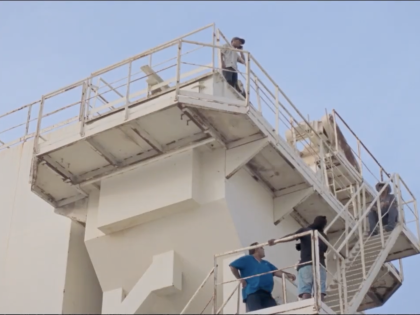
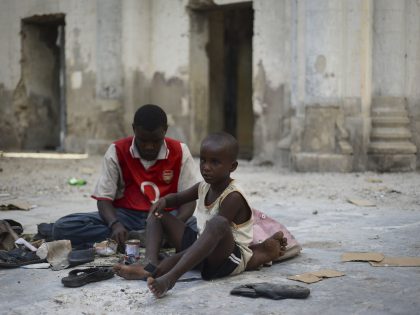
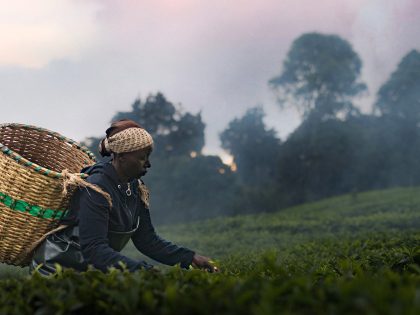
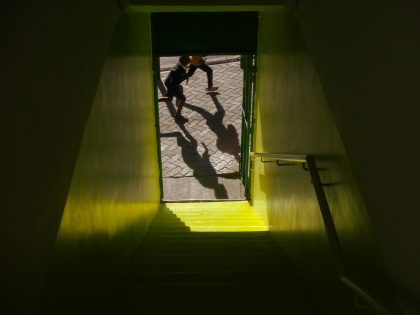
A still from "Reflections."
This TV (web?) ad was shot to promote the Cape Town, South Africa-based magazine “The Big Issue.” If you visit Cape Town and manage to be around one of its city center, the affluent mostly white suburbs or on the edges of the Waterfront, you’ll spot the sellers, usually homeless (or destitute) people at a traffic lights. The magazine’s content is mostly bland and “uplifting” and written by professional journalists, majority white. I don’t remember ever reading something by an actual homeless person in “The Big Issue.” This in strong contrast to Johannesburg’s “Homeless Talk,” written by that city’s homeless population.
Here’s the description for “The Big Issue” ad from the film directors at Butterfly Films:
A simple portrait of two women living and working in Cape Town. One lives in a squatter camp. The other next door to me in the city centre. Despite living in the same city, their worlds are far apart. Through the work of the Big Issue, their paths cross and, momentarily, a bridge is built, a connection is made. Build more bridges. Support the Big Issue. The Change is in your pocket.
I passed the video ad around the AIAC “office.”
Overall, the consensus is that the visuals are striking, the acting is great, the contrast between the lives of rich and poor in Cape Town–probably still the most segregated big city in South Africa–is captured well. The filmmakers were right not to use any dialogue; the pictures alone are enough tell the story. And the soundtrack is not too over bearing. (The fact that that’s the the beautiful voice of Neo Muyanga, one of our favorite composers and singers, two-thirds through on the soundtrack, is even better).

But we have issues with the politics of the ad. What does this mean: “… [T]heir paths cross and, momentarily, a bridge is built, a connection is made. Build more bridges.” Just as long as you buy a magazine, this whole mess–this structural, racialized mess that is Cape Town–would be less hard to take? We know it’s an ad, but come on.

One response to the video was blunt: “… [T]he juxtaposition of the “divided” yet intersecting lives is a bit too neat. [And] is it true that pocket change can really change structures? At least they’re not asking people to buy expensive red [stuff] like that AIDS charity does.”
While another could not help notice the power of pretty visuals: “… the film’s so well-done and aesthetically pleasing that I [forgot for a minute about the “neat” juxtaposition]. That’s the power of cinematography, beautiful music and a lovely storyline – they don’t provoke questions. ”
What do you think?