Music Break. Bonus Friday Edition

5 for le weekend.

“Propaganda” one of a series of songs/videos made by The King’s Will –one half of the UK duo is Musa Okwonga, whose family migrated from Uganda. The song is a homage to PR and advertising pioneer Edward Bernays:

M.E.D.’s “Blaxican.” L.A. identity politics:

A scene from “Coz Ov Moni,” “the world’s first pidgen musical” by Ghanaian duo Fokn Bois. They’ve been posting clips from the film on Youtube. This is the most recent one in the last few days:

http://www.youtube.com/watch?v=7ETwfWFX9JU

Clips one and two here and here.

A parody of rapper Drake’s “Up All Night” by Toronto-based Nigerian Femi Lawson:

http://www.youtube.com/watch?v=H9p7UWx5NH0

Sweden and Senegal collaborate. Sousou and Maher Sissoko:

Video for “Rain On My Lips” by rapper Pepe Haze (Burundian) and singer Steph McKee (Kenyan). They’re based in Nairobi, Kenya. The video is described as “the first ever African music video that is entirely in stop motion animation.”

See you Monday.

H/T: Kweligee and Welfare State of Mind.
Further Reading

Atayese

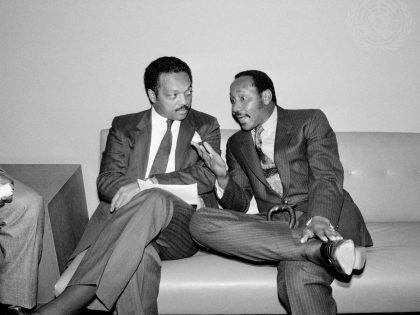
Honored in Yorubaland as “one who repairs the world,” Jesse Jackson’s life bridged civil rights, pan-Africanism, empire, and contradiction—leaving behind a legacy as expansive as it was imperfect.

Bread or Messi?

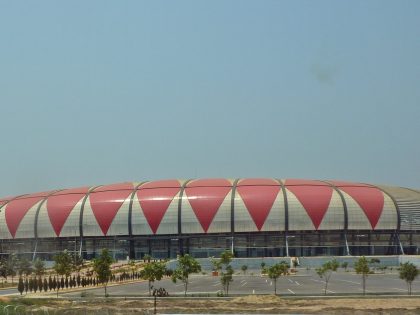
Angola’s golden jubilee culminated in a multimillion-dollar match against Argentina. The price tag—and the secrecy around it—divided a nation already grappling with inequality.

Visiting Ngara

A redevelopment project in Nairobi’s Ngara district promises revival—but raises deeper questions about capital, memory, and who has the right to shape the city.

Gen Z’s electoral dilemma

Long dismissed as apathetic, Kenya’s youth forced a rupture in 2024. As the 2027 election approaches, their challenge is turning digital rebellion and street protest into political power.

A world reimagined in Black

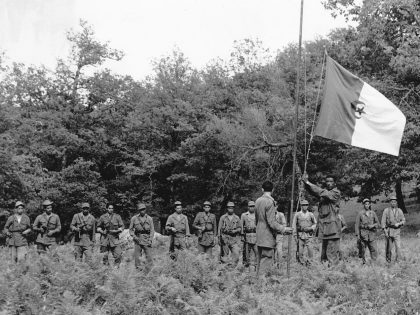
By placing Kwame Nkrumah at the center of a global Black political network, Howard W. French reveals how the promise of pan-African emancipation was narrowed—and what its failure still costs Africa and the diaspora.

Securing Nigeria

Nigeria’s insecurity cannot be solved by foreign airstrikes or a failing state, but by rebuilding democratic, community-rooted systems of collective self-defense.