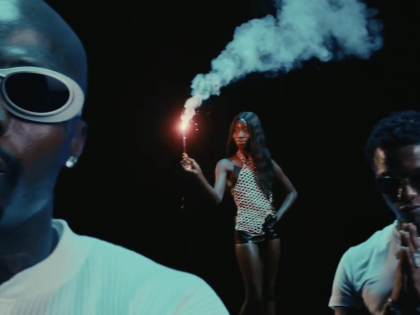
Not only is it Human Rights Day in South Africa today (read up on its meaning by searching our archive for ‘Sharpeville’), this day 22 years ago also saw Namibia wrestle itself officially free from the same Apartheid claws that were responsible for the massacre in Sharpeville. Which makes it a day both to remember and to celebrate. I’m picking up the Independence Day meme of popular music we started last year. 5 Namibian tunes. First up, Overitje group Ondarata’s ‘Tuvare Tuakapanda’:


Patrick, Deon and Kamutonyo (aka PDK) mix Portuguese, Oshiwambo, Kwangali and Umbundu in ‘Moko’:

The prolific Tate Buti with Kamati Nangolo:

http://www.youtube.com/watch?v=UPe4dt6j8_E

A bit older: Exit’s ‘Molokasi’:

http://www.youtube.com/watch?v=nM_Rf0vSppU

And Gazza’s love song to Seelima:

You can dance to it.
Further Reading

Slow death by food

Illegal gold mining is poisoning Ghana’s soil and rivers, seeping into its crops and seafood, and turning the national food system into a long-term public health crisis.

A sick health system

The suspension of three doctors following the death of Chimamanda Ngozi Adichie’s son has renewed scrutiny of a health-care system plagued by impunity, underfunding, and a mass exodus of medical professionals.

Afrobeats after Fela

Wizkid’s dispute with Seun Kuti and the release of his latest EP with Asake highlight the widening gap between Afrobeats’ commercial triumph and Fela Kuti’s political inheritance

Progress is exhausting

Pedro Pinho’s latest film follows a Portuguese engineer in Guinea-Bissau, exposing how empire survives through bureaucracy, intimacy, and the language of “development.”

The rubble of empire

Built by Italian Fascists in 1928, Mogadishu Cathedral was meant to symbolize “peaceful conquest.” Today its ruins force Somalis to confront the uneasy afterlife of colonial power and religious authority.