Torture in Zimbabwe
Last Thursday, Zimbabwe’s Supreme Court unanimously “chastised” state security agents for torturing Jestina Mukoko, national director of the Zimbabwe Peace Project, four years ago.
They came at dawn, December 3, 2008. Armed men broke into the house of Jestina Mukoko, the only surviving parent of a teenage child who watched, helplessly. They took her, in unmarked cars, and held her incommunicado for 21 days. During that time, they beat her feet with rubber truncheons. They dumped her into solitary confinement. They forced her to kneel on gravel, to endure searing pain. They questioned her about the whereabouts of her son. As Mukoko explains, “Psychological torture was the order of the day.” Under duress, the abductors, which is to say the State, handed Jestina Mukoko over to … the State. Where she was again imprisoned, in the notorious Chikurubi Maximum Detention Centre, after having spent time in police cells that had already been deemed “unfit for human habitation.”
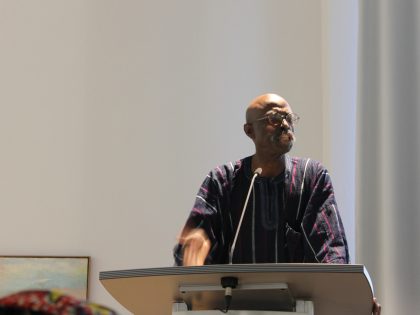
Mukoko told this story in May to the Oslo Freedom Forum in a panel titled “Spotlight on Repression: A glimpse into some of the world’s least known and most repressive regimes.” Her talk is entitled “In Mugabe’s Crosshairs.”
Where does that torture begin? As Mukoko notes, at the outset of her talk, she was denied her freedom for 89 days in prison, but she has been denied her freedom for far longer than that.
Where does the torture begin? At the house invasion? The abduction? The disappearance? The beatings? The kneeling on gravel? The nights with drunken captors taunting and threatening her? The police cell? The prison? The mandated weekly visits to the police, while awaiting trial?
It also begins in the globally constructed status of “least known”. Four years ago, when Jestina Mukoko was abducted, and then for the three months of her ordeal, she was in the news. Zimbabwe was in the news. Then Mukoko was released, and her story was relegated to the conference halls of human rights organizations.
And so Zimbabwe, somehow magically, receded into the Brigadoon fog at the season’s end.
Except that Zimbabwe did not go away. Jestina Mukoko was not the only person abducted that year. Among the 20 or so abducted, at the same time, by ‘State security agents’, there was Nigel Mutemagawu, two years old. He was taken with his parents and held incommunicado. He was beaten and then left without medical attention. All of those cases are still pending. That means, as Mukoko explains, that they must drag themselves, every Friday, to the police station to verify their whereabouts: “I know how traumatic that is.”
Jestina Mukoko and so many others are still kicking in Zimbabwe. She’s suing the government for torture. She continues to document violations and to give voice to those who suffer atrocity. She, and many others, continue to work for the project that is peace. Where does the torture end?