The Guardian of Malawi

IFPRI, via Flickr CC.

If you find yourself at a cocktail party this weekend where you may be required to demonstrate your worldly intelligence to the other guests, then The Guardian‘s “Pass notes” series is for you. A complete (and short!) guide to the most important issues of the day.

Because Africa is sure to be a hot topic (isn’t it always?), you can expect that someone will bring up this week’s conviction of Malawian couple Steven Mongeza and Tiwonge Chimbalanga for so-called “unnatural acts.” You, of course, will not be caught unawares, thanks to Pass notes 2,783: Malawi. In less time than it takes to look up the country on a map, you’ll learn that it is known as the “warm heart of Africa,” that celebrities like love the children there, and that negative attitudes towards homosexuality in Africa are your fault. In the event you are not quite sure what to say, The Guardian has you covered on that too:

Do say: “Colonial legacy or not, I object.”

Don’t say: “Do you think they’ll let David and Simon adopt?”

This is not funny.
Further Reading

Progress is exhausting

Pedro Pinho’s latest film follows a Portuguese engineer in Guinea-Bissau, exposing how empire survives through bureaucracy, intimacy, and the language of “development.”

The rubble of empire

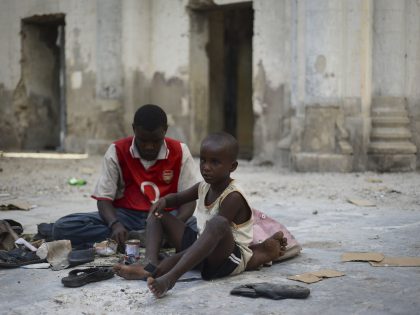
Built by Italian Fascists in 1928, Mogadishu Cathedral was meant to symbolize “peaceful conquest.” Today its ruins force Somalis to confront the uneasy afterlife of colonial power and religious authority.

Atayese

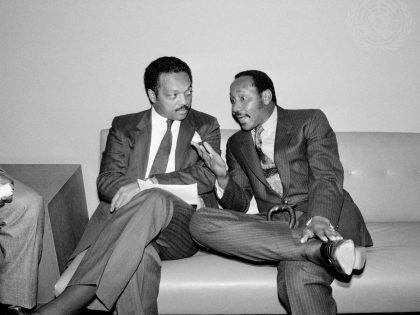
Honored in Yorubaland as “one who repairs the world,” Jesse Jackson’s life bridged civil rights, pan-Africanism, empire, and contradiction—leaving behind a legacy as expansive as it was imperfect.

Bread or Messi?

Angola’s golden jubilee culminated in a multimillion-dollar match against Argentina. The price tag—and the secrecy around it—divided a nation already grappling with inequality.

Visiting Ngara

A redevelopment project in Nairobi’s Ngara district promises revival—but raises deeper questions about capital, memory, and who has the right to shape the city.

Gen Z’s electoral dilemma

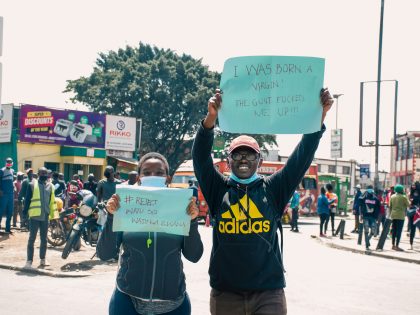
Long dismissed as apathetic, Kenya’s youth forced a rupture in 2024. As the 2027 election approaches, their challenge is turning digital rebellion and street protest into political power.

A world reimagined in Black

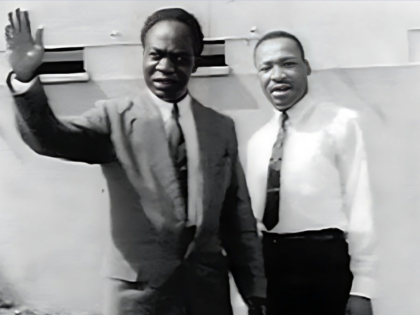
By placing Kwame Nkrumah at the center of a global Black political network, Howard W. French reveals how the promise of pan-African emancipation was narrowed—and what its failure still costs Africa and the diaspora.

Securing Nigeria

Nigeria’s insecurity cannot be solved by foreign airstrikes or a failing state, but by rebuilding democratic, community-rooted systems of collective self-defense.