Al-Andalus in East Africa

The clear signs of African influence on the Arabian Peninsula and the cultural fluidity that exists throughout the Indian Ocean.

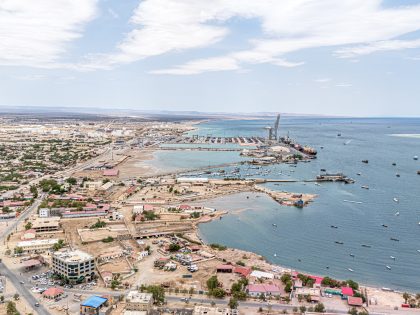
A dhow in Zanzibar (Public Domain image).

The English edition of Al-Akhbar has published an article by Amal Ghazal, author of the book, Islamic Reform and Arab Nationalism: Expanding the Crescent from the Mediterranean to the Indian Ocean, 1880s-1930s.   The article, like the book, provides an accessible historical review of the Omani empire (perhaps skewed a little to the Omani perspective), and its former capital Zanzibar, on the east coast of Africa that Omanis refer to as their version of Al-Andaluz. I have to say that one of the things that impressed me the most during several visits to the Arabian or Perisan Gulf over the past couple of years are the clear signs of African influence on the Peninsula. It made me think a lot about constructed notions of African vs Arab identity, and the cultural fluidity that exists throughout the Indian Ocean in general.

That’s the kind of history that isn’t generally celebrated or even taught in schools in the West, and I got the impression that folks on the Arabian peninsula weren’t so used to celebrating their African heritage themselves. So to learn that in Zanzibar there were nationalist efforts to erase such histories doesn’t come as a huge surprise.

On a related note: while many Muslims from West Africa live in Saudi Arabia and throughout the peninsula, in light of a history of forced separation, it’s fascinating that the majority of African immigrants I run into in Dubai were Christians from East Africa. Globalization wins again I suppose.

About the Author

Boima Tucker is a music producer, DJ, writer, and cultural activist. He is the managing editor of Africa Is a Country, co-founder of Kondi Band and the founder of the INTL BLK record label.

Further Reading

Progress is exhausting

Pedro Pinho’s latest film follows a Portuguese engineer in Guinea-Bissau, exposing how empire survives through bureaucracy, intimacy, and the language of “development.”

The rubble of empire

Built by Italian Fascists in 1928, Mogadishu Cathedral was meant to symbolize “peaceful conquest.” Today its ruins force Somalis to confront the uneasy afterlife of colonial power and religious authority.

Atayese

Honored in Yorubaland as “one who repairs the world,” Jesse Jackson’s life bridged civil rights, pan-Africanism, empire, and contradiction—leaving behind a legacy as expansive as it was imperfect.

Bread or Messi?

Angola’s golden jubilee culminated in a multimillion-dollar match against Argentina. The price tag—and the secrecy around it—divided a nation already grappling with inequality.

Visiting Ngara

A redevelopment project in Nairobi’s Ngara district promises revival—but raises deeper questions about capital, memory, and who has the right to shape the city.

Gen Z’s electoral dilemma

Long dismissed as apathetic, Kenya’s youth forced a rupture in 2024. As the 2027 election approaches, their challenge is turning digital rebellion and street protest into political power.

A world reimagined in Black

By placing Kwame Nkrumah at the center of a global Black political network, Howard W. French reveals how the promise of pan-African emancipation was narrowed—and what its failure still costs Africa and the diaspora.

Securing Nigeria

Nigeria’s insecurity cannot be solved by foreign airstrikes or a failing state, but by rebuilding democratic, community-rooted systems of collective self-defense.