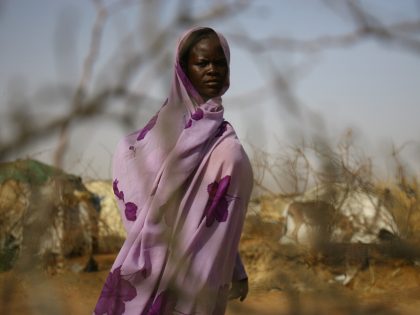
The Dutch ‘Stop Aids Now!’ campaigns have a long tradition of appealing to potential donors in Holland’s streets. November and December are the months the posters and TV ads pop up (around World Aids Day on December 1, coinciding with the arrival of Saint Nicholas and his Black Petes, and the ensuing spending spree) — staple NGO tactics this time of year. With governments slashing their international aid budgets, the street is where NGOs will need to scrape their money together. So you tell the Dutch that African kids “Mary and Neema don’t know how to prevent AIDS, but you do.” Or you show them (as in the video above) that while Dutch Alex wants a video game and Esther and Kim want a skippy ball, Themba wants to know “whether kissing will make you HIV positive,” and that “Ayanna wants a long and healthy life.” A reader suggested it was a rather patronizing and regressive campaign. She’s being too kind.

Further Reading

Atayese

Honored in Yorubaland as “one who repairs the world,” Jesse Jackson’s life bridged civil rights, pan-Africanism, empire, and contradiction—leaving behind a legacy as expansive as it was imperfect.

Bread or Messi?

Angola’s golden jubilee culminated in a multimillion-dollar match against Argentina. The price tag—and the secrecy around it—divided a nation already grappling with inequality.

Visiting Ngara

A redevelopment project in Nairobi’s Ngara district promises revival—but raises deeper questions about capital, memory, and who has the right to shape the city.

Gen Z’s electoral dilemma

Long dismissed as apathetic, Kenya’s youth forced a rupture in 2024. As the 2027 election approaches, their challenge is turning digital rebellion and street protest into political power.

A world reimagined in Black

By placing Kwame Nkrumah at the center of a global Black political network, Howard W. French reveals how the promise of pan-African emancipation was narrowed—and what its failure still costs Africa and the diaspora.

Securing Nigeria

Nigeria’s insecurity cannot be solved by foreign airstrikes or a failing state, but by rebuilding democratic, community-rooted systems of collective self-defense.